
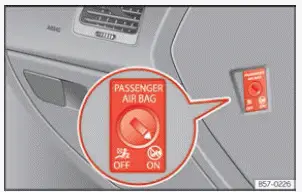
Fig. 26 Switch for activating and deactivating
the front passenger airbag.
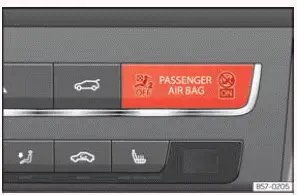
Fig. 27 Dashboard: control lamp for
deactivated front passenger airbag in centre
console.
The front passenger airbag should only be deactivated when it is necessary to install a rear-facing child restraint on the front passenger seat. In this situation, the airbag must be switched off before the child seat is installed, because deployment of an active front passenger airbag could strike the rear-facing restraint with considerable force and cause severe or fatal injuries to the child. The airbag must not be disabled simply for convenience or during normal passenger use.
SEAT recommends installing child restraint systems on the rear seats whenever possible. This arrangement avoids the need to deactivate the front passenger airbag and allows the vehicle's normal front passenger protection to remain available. Before installing any child restraint in the Seat Ateca, check that the selected seating position and restraint system are suitable for the child and comply with the relevant installation instructions.
Deactivating the front passenger airbag affects only that particular airbag. The remaining airbags fitted to the vehicle continue to be enabled and retain their normal protective functions, provided the airbag system is operating correctly. Switching off the passenger airbag therefore does not deactivate the entire airbag system or the other restraint equipment installed in the Seat Ateca.
Deactivate and activate the front passenger airbag
- Switch off the ignition completely before operating the front passenger airbag switch. The airbag status must only be changed while the ignition is off, as attempting to change it with the ignition switched on may cause a malfunction in the deactivation system.
- Open the front passenger door to access the airbag activation and deactivation switch. Make sure the vehicle is stationary and that the switch can be operated without obstruction.
- Remove the mechanical key blade from the vehicle key. This blade is used to operate the passenger airbag switch and select the required position.
- Insert the key blade into the slot of the front passenger airbag switch, as illustrated in Fig. 26. Approximately three-quarters of the key blade should enter the slot, which is the maximum intended insertion depth. Do not attempt to force the key farther into the mechanism.
- Carefully turn the key to the
 position to deactivate the front passenger airbag, or to the
 position to reactivate it. Turn the key gently and avoid applying excessive force. If the switch is difficult to operate, check that the key blade has been inserted fully to its intended depth before trying again.
- Close the front passenger door after changing the switch position. Make sure the key has been removed from the airbag switch and that the selected position corresponds to the intended use of the front passenger seat.
- When deactivating the front passenger airbag, switch the ignition on and verify that the
 control lamp remains illuminated, as shown in Fig. 27. The continuously illuminated indicator confirms the deactivated status and serves as a reminder that the front passenger airbag is switched off.
- When reactivating the front passenger airbag, switch the ignition on and check the indicator lamps carefully. The
 control lamp must not illuminate, while the
 lamp should light up for approximately 60 seconds before switching off automatically. This indicator sequence confirms the expected status of the reactivated passenger airbag.
DANGER Always switch off the ignition before changing the front passenger airbag to the deactivated position. Operating the deactivation switch while the ignition is on can cause a fault in the airbag disabling system. Such a malfunction may prevent the airbag status from being controlled or indicated correctly, creating a serious safety risk when a rear-facing child restraint is installed on the front passenger seat.
WARNING
- The driver is responsible for ensuring that the front passenger airbag is correctly activated or deactivated according to the intended use of the passenger seat. Before carrying a passenger or installing a child restraint, verify that the airbag switch and the corresponding indicator lamp show the appropriate status. An incorrect setting can expose the occupant to serious or fatal injuries in an accident.
- Never leave the vehicle key inserted in the passenger airbag activation and deactivation switch. The key or switch mechanism could become damaged, and the airbag setting might be changed unintentionally while the vehicle is moving. Always remove the key after selecting the required position and check that the switch remains in the intended setting.
- If the front passenger airbag has been deactivated, reactivate it as soon as the reason for disabling it no longer applies. An airbag that remains switched off cannot provide its intended supplementary protection to a front passenger during a qualifying collision. Always confirm that the airbag has been successfully reactivated before the seat is used by an occupant who requires its protection.
 Front airbags
Fig. 24 Driver's airbag in the steering wheel.
Fig. 25 Front passenger airbag located in the
dash panel.
The driver's front airbag is integrated into the centre of the steering wheel, w ...
 Side airbags
Fig. 28 Side airbag in driver's seat.
Fig. 29 Illustration of completely inflated side
airbag on the left side of the vehicle.
The side airbags in the Seat Ateca are integrated into the ...
Other materials:
Operating
Fig. 149 Outside rearview mirror rotary
control: adjust the trailer angle.
Fig. 150 Instrument cluster display: engage
reverse.
Rotary exterior mirror controls. The rotary control normally used to adjust the exterior mirrors also serves as the directional input for Tra ...
Navigation
Introduction
Fig. 164 Schematic representation: Navigation
view.
The Seat Ateca navigation system uses a global satellite positioning system to determine the vehicle's current location. At the same time, sensors installed in the vehicle monitor its movement and provide information about ...
Fuel Tank and Lines
SPECIFICATIONS
General Specifications
Torque Specifications
DESCRIPTION AND OPERATION
Fuel Tank and Lines
2.0L Gasoline Turbocharged Direct Injection (GTDI)
Fuel Tank and Lines
The fuel tank and lines consists of:
a single container (L-shaped) fuel tank.
a fuel level sensor assembly.
a Fuel ...
