
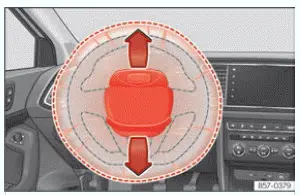
Fig. 24 Driver's airbag in the steering wheel.
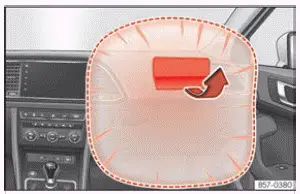
Fig. 25 Front passenger airbag located in the
dash panel.
The driver's front airbag is integrated into the centre of the steering wheel, while the front passenger airbag is installed in the passenger-side section of the dashboard. The locations of these airbag units are identified by the word "AIRBAG" on the corresponding interior surfaces. These markings indicate the areas from which the airbags deploy and should be kept free from objects or attachments that could interfere with their operation.
When the front airbags are triggered, the covers of their respective housings open to allow the airbags to inflate. The driver's airbag cover remains attached to the steering wheel, while the front passenger airbag cover remains attached to the dashboard, as illustrated in Fig. 24 and Fig. 25. The covers are designed to open as part of the deployment process without becoming detached from their designated mounting areas.
The front airbag system works together with the seat belts to provide additional protection for the heads and chests of the driver and front passenger during certain severe frontal collisions. The seat belts restrain the occupants and help maintain their correct positions, while the airbags provide supplementary protection as the occupants move forwards under the forces of the impact. The effectiveness of this combined protection depends on the occupants wearing their seat belts correctly and maintaining an appropriate distance from the airbag units.
In certain frontal collisions, the head airbags may also be activated on both sides of the Seat Ateca. Whether these airbags deploy depends on the specific characteristics of the accident and the conditions detected by the electronic control unit. Their activation is coordinated with the other relevant components of the vehicle's restraint system.
The front airbags are designed to release their inflation gas in a controlled manner when an occupant presses against them during a collision. This controlled release helps the airbags absorb some of the occupant's movement and provide supplementary protection for the head and chest. As the gas escapes, the airbags begin to deflate. Following the impact, they deflate sufficiently to restore visibility through the windscreen and allow the occupants to see their surroundings.
WARNING
- The space between the front occupants and the front airbags must remain completely unobstructed. Never allow another passenger, a pet or any object to occupy the airbag deployment area. Anything positioned between an occupant and an inflating airbag may be struck or propelled with considerable force, causing serious or fatal injuries. Always maintain the correct seating position and the recommended distance from the airbag.
- Airbags are designed to provide protection during a single deployment. Once an airbag has been activated, it cannot be reused and must be replaced with an appropriate new component. Have the affected restraint system inspected and repaired by a qualified specialised workshop before relying on it again.
- Never attach accessories or objects, including drink holders, telephone mounts or similar equipment, to the surfaces covering the airbag units. Such items can interfere with the opening of the airbag covers or become dangerous projectiles during deployment. Keep the steering wheel airbag cover and the passenger-side dashboard deployment area free from attachments and obstructions.
 Airbag system control lamps
Lights up on the
instrument cluster
This warning indicates a malfunction affecting the airbag system and/or the seat belt pretensioners. Because these components are essential parts of the ...
 Activate and deactivate front passenger
airbag
Fig. 26 Switch for activating and deactivating
the front passenger airbag.
Fig. 27 Dashboard: control lamp for
deactivated front passenger airbag in centre
console.
The front pass ...
Other materials:
Rear lid with sensor-controlled
opening and closing (Easy Open)
Fig. 59 Rear lid with sensor-controlled
opening (Easy Open).
On Seat Ateca models equipped with the Easy Open function, the rear lid can be unlocked, opened or closed without using the exterior handle or remote control buttons. When a valid vehicle key is detected near the rear of the vehic ...
Four Wheel Drive (4WD) Systems
DESCRIPTION AND OPERATION
All Wheel Drive (AWD) Systems
The AWD system consists of the following:
PTU
Rear driveshaft
AWD relay module
Rear axle with ATC solenoid
Torque from the engine is transferred through the transmission to the PTU.
This torque is transferre ...
Front passenger sensing system
WARNING: Even with Advanced Restraints Systems, children 12
and under should be properly restrained in a rear seating
position. Failure to follow this could seriously increase the risk of injury
or death.
WARNING: Sitting improperly out of position or with the seat
back reclined too far can tak ...
