
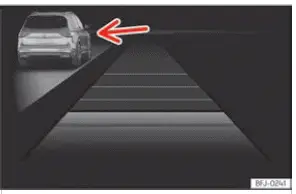
Fig. 116 On the instrument cluster display:
ACC active, vehicle detected on the left.
Adaptive Cruise Control includes functions intended to assist in certain traffic situations, but its behaviour remains subject to the limitations described earlier in this chapter. Before using ACC in more complex driving conditions, familiarise yourself with the warnings and operating restrictions explained in the Introduction section. The driver must continue observing surrounding traffic and should never assume that the system can correctly interpret every manoeuvre or road situation.
Avoid undertaking on the right
If ACC detects a vehicle travelling in the lane to the left at a speed lower than the cruising speed selected by the driver, it can reduce the Seat Ateca's speed to help prevent passing that vehicle on the right. As illustrated in Fig. 116, the system responds to the detected vehicle by braking within its defined comfort limits. This function is intended to assist in situations where the vehicle would otherwise continue travelling faster than traffic in the adjacent left lane. The amount of deceleration remains limited by the system's operating characteristics, and the driver must continue monitoring the surrounding traffic.
The driver can override this speed reduction by pressing the accelerator pedal. During the override, ACC regulation is suspended and the driver assumes responsibility for the vehicle's acceleration and position relative to other road users. Any decision to pass another vehicle must comply with the traffic regulations applicable to the road being used.
The function designed to help avoid undertaking on the right operates at speeds above approximately 80 km/h (50 mph). Its availability depends on the vehicle's equipment and the country in which the Seat Ateca is supplied or operated. The function may not be available in certain markets, and the driver must not rely on it to enforce overtaking regulations automatically.
Overtaking
When the driver activates the turn signal to indicate an intended overtaking manoeuvre, ACC can temporarily reduce the programmed following distance to the vehicle ahead. This adjustment is intended to support the overtaking process by modifying the system's distance regulation in response to the driver's indicated intention. The driver remains responsible for checking the mirrors, blind spots and surrounding traffic before changing lanes, as the turn signal alone does not establish that an overtaking manoeuvre can be completed safely.
Although ACC may reduce the following distance during the manoeuvre, it does not exceed the cruising speed programmed by the driver. The selected speed therefore remains the upper target for ACC regulation, and any additional acceleration beyond that value must be requested directly by the driver using the accelerator pedal.
This overtaking assistance function operates at speeds above approximately 80 km/h (50 mph). It may not be available in every country, depending on the vehicle's configuration and applicable market requirements. Regardless of whether the function is available, the driver must maintain a safe distance and ensure that the overtaking manoeuvre complies with local traffic regulations.
Stop&Go function
Applicable to Seat Ateca models equipped with an automatic transmission. The ACC Stop&Go function allows the vehicle to slow down and come to a complete standstill when a detected vehicle ahead stops. This capability extends Adaptive Cruise Control operation to certain situations involving stationary traffic, provided that the system can recognise the vehicle ahead and the required operating conditions are satisfied. The driver must still monitor the surroundings and remain prepared to brake independently.
After the Seat Ateca has stopped under ACC control, the system remains active and the message "ACC ready to start" appears in the instrument cluster for several seconds. While this message is displayed, the vehicle is prepared to move off again if the vehicle ahead begins moving. The period during which the message remains available can be extended or reactivated by pressing the  button. On vehicles equipped with Travel Assist, taking hold of the steering wheel can also extend or reactivate this readiness indication. During the active ready-to-start period, the Seat Ateca can begin moving automatically when the vehicle in front moves forward, without requiring a separate accelerator input.
If the "ACC ready to start" message is no longer displayed when the vehicle ahead begins moving, the driver must initiate the restart using one of the available controls. Before doing so, check the road ahead and ensure that the space in front of the vehicle is clear. The following methods can be used to request movement once the vehicle ahead has moved off:
- Press the accelerator pedal to initiate movement manually. Use an appropriate amount of accelerator input and remain prepared to brake if traffic ahead stops again or an obstacle is present.
- Alternatively, press the
 button on the multifunction steering wheel. This requests the resumption of ACC operation after the vehicle has been stationary, provided that the system's operating conditions allow it.
- On Seat Ateca models equipped with Travel Assist, take hold of the steering wheel again to request resumption of the ready-to-start function. The driver must remain attentive and ensure that moving off is safe before allowing the vehicle to proceed.
ACC is deactivated automatically in certain situations while the vehicle is stationary. These conditions prevent the system from remaining indefinitely ready to control the vehicle after a stop:
- The stationary phase continues for several minutes. If the vehicle remains stopped for an extended period, ACC is deactivated rather than continuing to maintain its active operating state. The driver must then take responsibility for the vehicle and reactivate the assistance function when appropriate.
- A vehicle door is opened. Opening a door causes ACC to deactivate, as the conditions required for continued automatic regulation are no longer satisfied. The driver must ensure that the vehicle is secured and that all doors are closed before attempting to resume assisted driving.
WARNING When the message "ACC ready to start" is displayed in the instrument cluster, the Seat Ateca may move off automatically as soon as the vehicle ahead begins moving. The driver must be aware that the radar sensor may not recognise every obstacle in the vehicle's path. An object, person or other obstruction could therefore remain undetected when the vehicle starts moving. Never assume that the road ahead is clear simply because ACC is ready to resume driving.
Automatic movement in these circumstances can result in a collision and cause serious accidents or injuries. The driver remains responsible for ensuring that the vehicle can move forward safely, even when ACC has brought it to a stop and is prepared to restart. Particular care is required in congested traffic or any situation where obstacles may appear between the Seat Ateca and the vehicle ahead.
- Always check the road and the area immediately in front of the vehicle before allowing ACC to move off. Confirm that no pedestrians, objects or other obstacles are in the vehicle's path, and monitor the movement of surrounding traffic. If there is any doubt about whether the manoeuvre can be completed safely, apply the brakes yourself and keep the vehicle stationary until it is safe to proceed.
 ACC operation
Fig. 114 On the instrument cluster display:
ACC active.
Fig. 115 On the multifunction steering wheel:
buttons for operating the ACC.
Vehicle detected ahead. The correspond ...
 ACC system limitations
Adaptive Cruise Control (ACC) has technical and operational limitations that must be considered whenever the system is used. Although ACC can assist the driver by regulating speed and maintaining a se ...
Other materials:
Main beam assist (Light Assist)
The main beam assist (Light Assist) automatically controls the main beam headlights to help prevent dazzling drivers travelling in the opposite direction or vehicles ahead in the same direction. By monitoring the traffic situation, the system adjusts the use of the main beam to provide additional ro ...
Auxiliary input jack
WARNING: Driving while distracted can result in loss of vehicle
control, crash and injury. We strongly recommend that you use
extreme caution when using any device that may take your focus off
the road. Your primary responsibility is the safe operation of your
vehicle. We recommend against the u ...
Child safety locks
The childproof locks are located on the rear edge of each rear door and
must be set separately for each door.
When these locks are set, the rear
doors cannot be opened from the
inside.
• Insert the key and turn to the
lock position (key horizontal) to
engage the childproof locks.
• ...
