
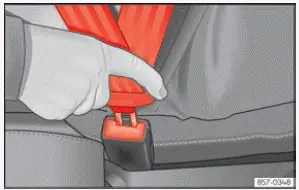
Fig. 20 Insert the latch plate of the seat belt
into the buckle.
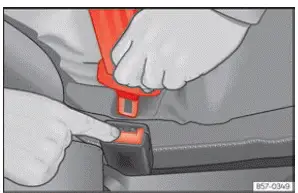
Fig. 21 Release the seat belt's latch plate.
When fastened and positioned correctly, seat belts help keep vehicle occupants securely in their seats during sudden braking, abrupt manoeuvres and collisions. They are designed to restrain the body in a position that allows the vehicle's other safety systems, including the airbags, to provide their intended protection. Correct fastening is therefore just as important as wearing the belt itself. Before every journey in the Seat Ateca, make sure that the belt is properly routed, securely engaged and free from twists.
Fastening the seat belt
Fasten your seat belt before every journey, regardless of how short the distance may be. The vehicle should not begin moving until the driver and all passengers are seated correctly and have secured their restraints. Follow these steps to fasten the belt properly:
- Adjust the front seat and head restraint to suit your height and body position. The seat should allow you to sit comfortably with your back supported, while the head restraint should be positioned correctly to provide appropriate protection.
- Make sure the rear seat backrest is raised to its normal upright position and securely engaged in its locking mechanism. A backrest that is not properly locked may compromise the effectiveness of the seat belt and the protection provided to rear passengers.
- Take hold of the seat belt latch plate and pull the webbing smoothly across your body. Position the shoulder section over your chest and the lap section across your pelvis, ensuring that the belt lies flat and follows its intended path. Do not allow the webbing to twist while pulling it into position.
- Insert the latch plate into the buckle belonging to your seating position, as shown in Fig. 20. Make sure that you use the correct buckle and push the latch plate into it until it engages securely.
- Gently pull on the seat belt to check that the latch plate is firmly locked in the buckle. The belt should remain securely fastened and lie comfortably against the body without unnecessary slack.
Releasing the seat belt
Only release your seat belt after the vehicle has come to a complete stop. Unfastening the belt while the Seat Ateca is moving removes an essential part of the occupant restraint system and exposes you to serious injury if sudden braking or an accident occurs. Once the vehicle is stationary, release the belt as follows:
- Press the red release button on the seat belt buckle, as illustrated in Fig. 21. The button operates the buckle's locking mechanism and allows the latch plate to be removed.
When the release button is pressed, the latch plate disengages from the buckle. Make sure that the belt is completely released before attempting to leave the seat.
- Hold the belt webbing or latch plate and guide the seat belt back towards its retractor by hand. Allow it to retract smoothly without twisting, becoming trapped or striking the interior trim. Controlled retraction helps prevent damage to the belt, buckle plate and surrounding vehicle components.
WARNING
- A seat belt cannot provide its intended level of protection unless the seat backrest is positioned appropriately and the belt is worn correctly for the occupant's height and body size. An excessively reclined backrest or incorrectly routed belt can allow the body to move into a dangerous position during a collision, significantly increasing the risk of injury.
- Never unfasten your seat belt while the vehicle is moving. If an accident occurs or the driver brakes suddenly, an occupant without a fastened seat belt may be thrown forwards or sideways, potentially suffering severe or fatal injuries.
- An incorrectly positioned or excessively loose seat belt can cause serious injuries if the webbing moves away from the stronger parts of the body, such as the pelvis, and applies force to more vulnerable areas, including the abdomen. Always ensure that the belt lies flat, fits closely and remains in the correct position throughout the journey.
 Head-on collisions and the laws of
physics
Fig. 18 A driver not wearing a seat belt may be
thrown forward violently.
Fig. 19 Any rear seat occupants not wearing
a seat belt may be thrown forward violently,
hitting the driver ...
 Correct position of the seat belt
Fig. 22 Correct seat belt and headrest
positions, viewed from front and the side.
Fig. 23 Position of seat belt during pregnancy.
Seat belts provide their greatest possible protection w ...
Other materials:
Windscreen washer reservoir
Checking the level of the windscreen washer reservoir and refilling it
Fig. 211 In the engine compartment: blue cap of the windscreen washer reservoir.
Check the fluid level in the windscreen washer reservoir regularly and replenish it whenever necessary. Maintaining an adequate supply o ...
Fuel consumption
Filling the Tank
The advertised capacity is the indicated capacity and the empty reserve
combined. Indicated capacity is the difference in the amount of fuel in a
full tank and a tank when the fuel gauge indicates empty. Empty reserve
is the amount of fuel in the tank after the fuel gauge indica ...
General Procedures
Solenoid Body Identification Procedure
Original Solenoid Body Service Tag
Using the scan tool, select Powertrain, Transmission and Transmission
Solenoid Body Identification from the toolbox icon and follow the
instructions displayed on the scan tool.
The solenoid body identification screen di ...
