
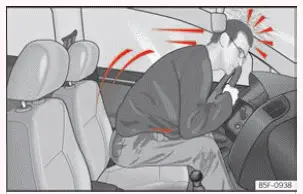
Fig. 18 A driver not wearing a seat belt may be
thrown forward violently.
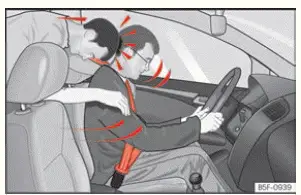
Fig. 19 Any rear seat occupants not wearing
a seat belt may be thrown forward violently,
hitting the driver who is wearing the seat belt.
The forces involved in a head-on collision can be understood by considering a basic principle of physics. As soon as a vehicle begins moving, both the vehicle and everyone travelling inside it possess energy associated with their motion. This is known as kinetic energy. During a collision, the vehicle may slow down or stop very abruptly, but the occupants' bodies tend to continue moving in their original direction unless they are restrained. This is why correctly fastened seat belts are essential for protecting occupants of the Seat Ateca.
The amount of kinetic energy depends on two main factors: the speed at which the vehicle is travelling and the mass of the vehicle and its occupants. A heavier vehicle or greater combined occupant mass means that more energy is involved at a given speed. As speed increases, the energy that must be absorbed or dissipated during a collision rises considerably. Consequently, both vehicle mass and travelling speed influence the forces generated in an accident.
Vehicle speed has a particularly significant effect because kinetic energy increases with the square of speed. For example, if the travelling speed doubles from 25 km/h (15 mph) to 50 km/h (30 mph), the kinetic energy becomes four times greater. This means that a relatively modest increase in speed can produce a much larger increase in the energy involved in a collision, making effective occupant restraint even more important.
Even at speeds between 30 km/h (19 mph) and 50 km/h (30 mph), the forces acting on an occupant during a collision can easily reach levels equivalent to more than one tonne (1000 kg). Such forces are far beyond what a person can resist through muscular strength alone. At higher speeds, the forces can become substantially greater, increasing the likelihood of serious or fatal injuries when occupants are not properly restrained.
Occupants who are not wearing seat belts are not securely restrained to their seats. In a frontal collision, their bodies continue travelling forwards at approximately the speed the vehicle was moving immediately before impact. Although the vehicle itself may stop suddenly, an unrestrained occupant continues moving until striking part of the interior, another occupant or another obstacle. A correctly fastened seat belt helps control this movement and distributes the restraining forces across suitable areas of the body.
This principle is not limited to frontal impacts. The same physical behaviour occurs in other types of accidents, including side collisions, rear-end impacts and situations involving sudden changes in vehicle movement. Whenever the vehicle's speed or direction changes abruptly, occupants who are not properly restrained may continue moving independently of the vehicle, exposing themselves and others to considerable danger.
Even in a collision at a relatively low speed, the forces acting on the body can be too great for an occupant to resist by bracing against the dashboard or another interior surface with their hands. During a head-on collision, an unbelted driver or passenger may be thrown forwards without control, striking the steering wheel, instrument panel, windscreen or other interior components, as illustrated in Fig. 18. These impacts can cause severe injuries, particularly when the occupant is positioned outside the protective area intended for the vehicle's restraint systems.
Rear passengers must also wear their seat belts correctly at all times. In an accident, an unrestrained rear occupant can be propelled forwards through the passenger compartment with considerable force. As shown in Fig. 19, this movement may cause the rear passenger to strike a front-seat occupant, even if that person is wearing a seat belt. An unbelted rear passenger therefore endangers not only themselves but also the driver and front passenger. Every occupant of the Seat Ateca must use the seat belt provided for their seating position throughout the journey.
 Seat belt buckled indication
Lights up red
A red seat belt warning indicator informs the driver that the driver's or front passenger's seat belt has not been fastened. This warning is intended to remind the relevant occupant to ...
 Fastening and unfastening the seat
belt
Fig. 20 Insert the latch plate of the seat belt
into the buckle.
Fig. 21 Release the seat belt's latch plate.
When fastened and positioned correctly, seat belts help keep vehicle occupa ...
Other materials:
Child safety locks
The childproof locks are located on the rear edge of each rear door and
must be set separately for each door.
When these locks are set, the rear
doors cannot be opened from the
inside.
• Insert the key and turn to the
lock position (key horizontal) to
engage the childproof locks.
• ...
Introduction
Before purchasing accessories or replacement parts for your Seat Ateca, always seek advice from an authorised SEAT dealer or a qualified specialist retailer. This will help you determine whether the selected components are suitable for your vehicle and whether any particular installation requirement ...
Removal and Installation
Safety Belt Anchor and Pretensioner
Special Tool(s)
Removal and Installation
WARNING: All
safety belt components must be inspected and corrected as part of any collision
repair. Inspect all safety belt components as prescribed by Safety Belt
Inspection and Repair After a Collision found in ...
