
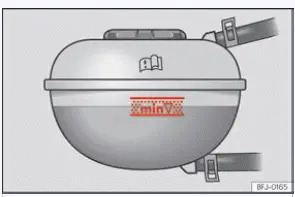
Fig. 208 In the front compartment: marking on
coolant expansion tank.
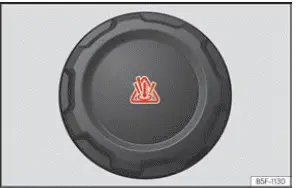
Fig. 209 Front compartment: coolant
expansion tank cap.
Preliminary steps
Before checking or adding engine coolant, prepare the Seat Ateca carefully and observe the safety precautions for working in the engine compartment. The cooling system may remain hot and pressurised after the engine has been switched off, so the coolant level should be checked only under the appropriate conditions.
- Park the vehicle on a firm, horizontal surface so that the coolant level can be assessed accurately. Make sure the vehicle is securely immobilised and cannot move unexpectedly while the bonnet is open.
- Wait until the engine has cooled completely before inspecting the coolant expansion tank or attempting to remove its cap. Do not assume that the cooling system is safe to open simply because the engine has been switched off for a short time.
- Open the front bonnet using the prescribed procedure, ensuring that it is properly supported before reaching into the engine compartment. Avoid touching components that may still be hot.
- Locate the engine coolant expansion tank. It can be identified by the coolant warning symbol on its cap
 , as illustrated in Fig. 209. Check that you have identified the correct reservoir before carrying out any further inspection or topping-up procedure.
Check the level
When a new Seat Ateca is delivered, the coolant level in the expansion tank may be above the normally marked range. This condition can be present from the factory and does not necessarily indicate that the cooling system has been overfilled incorrectly.
Such a level is considered normal on a newly delivered vehicle, and there is no need to remove or extract the excess coolant simply because it appears above the marked area. The coolant level should subsequently be monitored according to the normal inspection procedure.
- With the engine cold, inspect the coolant level through the side of the expansion tank and compare it with the markings shown in Fig. 208. Under normal checking conditions, the liquid should be visible between the minimum and maximum level marks. Make sure the vehicle is standing on level ground when assessing the amount of coolant in the reservoir.
- If the coolant level has fallen below the minimum marking (
 ) on the expansion tank, the cooling system requires attention and coolant may need to be added in accordance with the instructions below. Remember that the level changes with temperature: when the engine is warm, expansion of the coolant may cause the liquid to rise slightly above the upper marking. For a reliable comparison with the specified range, check the level when the engine is cold.
Topping up the fluid
If the engine coolant level becomes excessively low, the coolant warning light illuminates to alert the driver. This warning must not be ignored, as operating the engine without sufficient coolant may result in overheating and serious mechanical damage. If the warning appears, seek assistance from qualified specialist personnel immediately rather than continuing to drive without establishing the cause of the problem.
If the coolant level is too low and a specialist workshop is not available nearby, the following precautions and instructions must be observed. Topping up should only be considered when the engine has cooled sufficiently and some coolant remains visible in the expansion tank. If the reservoir is completely empty, do not attempt to restore the level yourself or continue driving.
- Before touching the coolant expansion tank cap, protect your face, hands and arms against the possibility of escaping hot coolant or steam. Place a suitable, sufficiently thick cloth over the cap to provide protection while it is being handled. Never attempt to open the reservoir while the cooling system is hot or visibly releasing steam.
- Once the engine and cooling system have cooled completely, carefully loosen the expansion tank cap. Turn it slowly to allow any remaining pressure to escape gradually, keeping your face away from the opening. Do not remove the cap abruptly or force it if the system is still under pressure.
- Use only fresh coolant that meets the specifications approved by SEAT for the vehicle. The replacement mixture must contain the correct coolant additive in the required proportion, as described in the coolant specifications section. Do not add an unapproved coolant simply because it is available or appears similar in colour.
- Only add coolant if there is still some liquid visible inside the expansion tank. If the reservoir is completely empty, the cooling system may have lost a substantial amount of coolant, and adding fluid without identifying the problem could lead to engine damage. In this situation, do not continue driving the Seat Ateca. Contact a qualified specialist or arrange for appropriate roadside assistance.
- If coolant remains visible in the expansion tank, carefully add the specified coolant mixture until the level reaches the upper marking on the reservoir. Avoid spilling coolant onto surrounding components and do not exceed the permitted filling level. Check the coolant level again the following day, preferably with the engine cold.
If the coolant level has fallen again, arrange for a specialist workshop to inspect the cooling system. A repeated reduction in the coolant level may indicate leakage or another fault that requires professional diagnosis and repair.
- After topping up, the coolant level must remain within the marked range on the expansion tank, as illustrated in Fig. 208. Never fill above the upper edge of the marked area. The space above the normal filling level is necessary to accommodate changes in coolant volume as its temperature rises.
- Once the correct level has been reached, refit the expansion tank cap and screw it on securely. Make sure the cap is fully tightened so that the cooling system can maintain its intended operating conditions and coolant cannot escape through an improperly closed reservoir.
- If the recommended coolant additive is unavailable in an emergency, do not substitute another coolant product that has not been approved by SEAT. In this exceptional situation, add distilled water only, provided that the other conditions for safe topping up have been met.
As soon as possible afterwards, have the coolant mixture corrected by adding the recommended additive in the proper proportion. Distilled water alone does not provide the same antifreeze and corrosion protection as the specified coolant mixture, so the correct concentration must be restored promptly.
WARNING Hot engine coolant and steam can cause severe scalding and burns. The cooling system operates under pressure when the engine is hot, and opening the expansion tank prematurely may cause hot liquid or steam to escape suddenly. Always allow the system to cool before attempting to inspect or refill the coolant.
- Never open the front bonnet if steam or coolant can be seen or heard escaping from the engine compartment. Keep a safe distance from the vehicle and wait until the discharge has stopped completely before approaching the affected area. Do not attempt to investigate the source of the escaping coolant while the system is still releasing hot fluid or steam.
Engine components and nearby surfaces may remain extremely hot after operation. Direct contact with these parts can cause serious skin burns, even when the engine is no longer running. Avoid touching any component until it has cooled sufficiently.
- Before opening the front bonnet, take the necessary precautions to secure the vehicle and protect anyone nearby. In particular, observe the following requirements:
- Apply the electronic parking brake and make sure the vehicle is securely immobilised before beginning any inspection or maintenance work in the engine compartment.
- Keep children away from the front compartment at all times. Never allow children to approach or touch engine components, coolant containers or maintenance equipment, and do not leave them unattended near the vehicle while the bonnet is open.
- When the engine is hot, the cooling system is pressurised and the coolant may be at a temperature capable of causing severe burns. Never attempt to open the coolant expansion tank cap under these conditions. Removing the cap while pressure remains in the system can cause hot coolant to spray out unexpectedly, resulting in serious injuries.
- After the engine has cooled sufficiently, loosen the expansion tank cap very slowly and carefully by turning it anticlockwise while applying slight downward pressure. This controlled procedure allows any residual pressure to be released gradually. Stop if there are signs that the system is still under significant pressure.
- Use a large, thick cloth to shield your face, hands and arms when opening the expansion tank. Keep your face away from the cap and reservoir opening to reduce the risk of injury if any remaining steam or coolant escapes.
NOTICE Always use distilled water when preparing the specified coolant mixture or when adding water in an emergency. Other types of water may contain dissolved minerals and chemical substances that can promote corrosion, deposits and damage inside the engine cooling system. If non-distilled water has been added, arrange for a qualified specialist workshop to replace the cooling system fluid completely as soon as possible. Continuing to operate the system with unsuitable water may compromise its long-term reliability and damage internal components.
- Engine coolant expands as its temperature increases. If the expansion tank is filled above the specified level, the additional volume may cause excess coolant to overflow or be expelled from the system when the engine becomes hot. Escaping coolant can contaminate surrounding components and potentially cause damage to the vehicle. Always leave the level within the prescribed range.
- When adding coolant, never fill beyond the upper edge of the marked area on the expansion tank, as shown in Fig. 208. The maximum marking indicates the permitted filling limit under the specified checking conditions.
If the tank is overfilled, the increase in coolant volume during engine operation may force the excess liquid out of the cooling system. This can result in coolant loss, contamination of nearby components and possible vehicle damage. Add fluid gradually and check the level carefully rather than filling the reservoir above the mark.
- If the cooling system has lost a substantial amount of coolant, do not attempt to refill it until the engine has cooled completely. Opening or filling a hot cooling system can be dangerous, and a significant loss of coolant may indicate an underlying fault.
A large reduction in coolant level can be caused by leakage from the cooling system. Adding more coolant without correcting the cause may only provide a temporary increase in the level and does not resolve the problem.
Have the cooling system inspected by a qualified specialist workshop without delay. Continuing to operate the Seat Ateca with significant coolant loss can lead to overheating, cooling system malfunction and serious engine damage.
- Never add coolant if the expansion tank is completely empty. A fully empty reservoir may indicate that air has entered the cooling system or that a substantial amount of coolant has escaped. In these circumstances, simply adding more liquid may not restore proper cooling system operation. Do not continue driving; seek assistance from qualified specialist personnel.
Operating the engine with insufficient coolant or air trapped in the cooling system may prevent adequate heat removal and result in serious engine damage. The cause of the coolant loss must be investigated before the vehicle is returned to normal use.
- Whenever operating fluids are checked, replaced or topped up, make sure that each fluid is poured into its correct filler opening or reservoir. Different vehicle systems require specific products, and the fluids are not interchangeable. Adding an unsuitable liquid to the engine cooling system or another reservoir can cause serious malfunctions, chemical incompatibility and extensive mechanical damage. Always verify the reservoir identification and the required fluid specification before adding anything.
 Coolant specifications
The engine cooling system of the Seat Ateca is filled at the factory with a carefully formulated mixture of specially treated water and a minimum of 40% G12evo coolant additive, meeting specification ...
 Brake fluid
Check and refill the brake fluid
Fig. 210 Engine compartment: brake fluid reservoir cap.
Checking the brake fluid level
The brake fluid level in the Seat Ateca must remain between the an ...
Other materials:
Selecting a drive profile
Fig. 102 Centre console: Driving Experience
button.
The Seat Ateca allows the driver to select a driving profile whenever the ignition is switched on, regardless of whether the vehicle is stationary or moving. Each available profile adjusts certain vehicle systems to suit a particular dri ...
Starting and Stopping the Engine
GENERAL INFORMATION
WARNING: Extended idling at high engine speeds can produce
very high temperatures in the engine and exhaust system,
creating the risk of fire or other damage.
WARNING: Do not park, idle, or drive your vehicle on dry grass
or other dry ground cover. The emission system heats ...
Views of the peripheral vision system
(modes)
Fig. 148 Display on the Area View system
screen: A Front camera: off-road view. B Rear
camera: off-road view.
The red reference lines displayed in the relevant camera views indicate a distance of approximately 40 cm from the vehicle. These markings help the driver judge the position ...
