
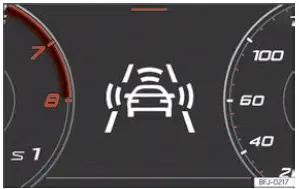
Fig. 121 On the instrument panel display:
advance warning indications.
Front Assist operates at vehicle speeds from approximately 5 km/h (3 mph). The system monitors the area ahead and, when it identifies a potential collision risk, can warn the driver or intervene through the braking system. Its response depends on several factors, including the Seat Ateca's speed, the relative speed of the detected object, the type of road user or obstacle recognised, and the urgency of the situation. Not every intervention follows all the warning stages described below. Depending on the circumstances, Front Assist may omit individual stages to provide a more appropriate and timely response to an emerging hazard.
Safety distance warning
If Front Assist determines that the Seat Ateca is following another vehicle at an insufficient distance, it alerts the driver by displaying the  warning symbol in the instrument cluster. This indication draws attention to the reduced separation between the vehicles and reminds the driver to increase the following distance. The warning does not replace the need to monitor traffic ahead or maintain enough space for safe braking.
The moment at which the safety distance warning appears depends on the driver's behaviour, the vehicle's current speed and the difference in speed between the Seat Ateca and the vehicle ahead. For example, the closing distance can change more rapidly when the vehicle in front is travelling considerably slower. The driver must assess the situation independently and adjust speed or following distance before the gap becomes unsafe.
Advance warning
When Front Assist identifies a possible collision with a vehicle travelling ahead, it issues an advance warning to alert the driver to the developing danger. The warning consists of an audible signal accompanied by a visual indication in the instrument cluster, as illustrated in Fig. 121. Its purpose is to prompt the driver to respond promptly by braking or taking another appropriate action before the situation becomes more critical.
The timing of the advance warning varies according to the traffic conditions and the driver's behaviour. The system evaluates the developing situation and determines when an alert is required. At the same time, the vehicle prepares the braking system for a possible emergency braking intervention. This preparation supports the subsequent braking response if the driver does not react or if the collision risk continues to increase.
When Front Assist is active and displays a warning, information from other vehicle functions may temporarily be hidden on the instrument cluster screen. This allows the collision-related indication to take priority so that the driver can recognise the warning quickly. Continue observing the road rather than relying exclusively on the displayed message.
Critical warning
If the driver does not respond to the advance warning and Front Assist determines that the collision risk has become more urgent, the system may initiate a brief braking intervention. This produces a noticeable jolt intended to draw the driver's attention to the imminent danger. The intervention serves as an additional warning that immediate action is required. The driver should respond without delay by applying the brakes or taking suitable evasive action when it is safe to do so.
Automatic braking
If the driver also fails to respond adequately to the critical warning, Front Assist may initiate autonomous emergency braking. The system progressively increases braking force according to the severity of the detected collision risk and the conditions under which it is operating. This intervention is intended to reduce the Seat Ateca's speed and, where possible, help prevent a collision. However, the available braking distance, road surface and system limitations may prevent the vehicle from stopping before an impact. The driver must remain prepared to apply additional braking whenever necessary.
Driver emergency braking assistance system
If the driver begins braking after the critical warning but Front Assist determines that the applied braking force is insufficient for the detected emergency, the system can increase braking intensity. This additional assistance is intended to support the driver's braking action and reduce the consequences of a potential collision. The driver should continue pressing the brake pedal as required and maintain control of the Seat Ateca throughout the manoeuvre.
WARNING
- Front Assist cannot guarantee that a collision will be prevented. Even when the system detects a hazard and applies emergency braking, the available distance or driving conditions may make an impact unavoidable. Nevertheless, reducing the vehicle's speed before a collision can significantly lessen the force of the impact and potentially reduce its consequences. Never rely on Front Assist as the sole means of avoiding an accident.
- When Front Assist automatically applies the brakes, the brake pedal may feel harder than usual. This change in pedal resistance can occur during the system's braking intervention and should not prevent the driver from continuing to brake when necessary. Maintain sufficient pressure on the pedal to control the vehicle safely.
- Automatic braking interventions initiated by Front Assist can be interrupted by pressing the clutch pedal, operating the accelerator or making a firm steering movement. These driver inputs may cancel the system's intervention even though the collision risk remains. Before overriding automatic braking, ensure that the intended action is appropriate for the traffic situation and that the vehicle can be controlled safely.
- Front Assist may apply sufficient braking force to bring the Seat Ateca to a complete standstill. However, the system does not keep the vehicle stationary indefinitely after an automatic emergency stop. The driver remains responsible for preventing further movement and must not assume that Front Assist will continue holding the brakes.
Use the foot brake to keep the vehicle stationary whenever necessary. If the vehicle has stopped following a Front Assist intervention, maintain control of the brake pedal and check the surrounding traffic before moving off again.
 Introduction
The emergency brake assistance system, known as Front Assist, is designed to help prevent frontal collisions with certain objects and road users in the vehicle's path. When a collision cannot be avoid ...
 System limitations
Fig. 122 On the instrument cluster display:
indication of the system's initial self-calibration.
Front Assist has inherent technical limitations that can affect its ability to recognise ...
Other materials:
Fuel Charging and Controls - 3.5L GTDI
SPECIFICATIONS
Material
Torque Specifications
a Refer to the procedure in this section.
DESCRIPTION AND OPERATION
Fuel Charging and Controls
3.5L Gasoline Turbocharged Direct Injection (GTDI)
WARNING: Do
not smoke, carry lighted tobacco or have an open flame of any type when working
on or n ...
Introduction
Only attempt to change a wheel yourself if you understand the required procedure, are familiar with the relevant safety precautions and have all the necessary tools available. The Seat Ateca must be parked in a safe and suitable location before any wheel-changing work begins. If the vehicle cannot b ...
Module Communications Network
DESCRIPTION AND OPERATION
Communications Network
Overview
Multiplexing is a method of sending 2 or more signals simultaneously on the
same network circuits. Multiplexing is used to allow 2 or more electronic
modules (nodes) to communicate simultaneously over a twisted-wire pair [data (+)
and data ...
