
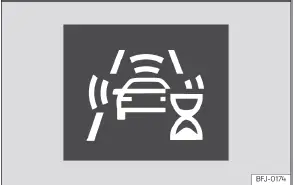
Fig. 122 On the instrument cluster display:
indication of the system's initial self-calibration.
Front Assist has inherent technical limitations that can affect its ability to recognise hazards and respond appropriately. Under certain circumstances, the system may issue a warning later than expected, fail to intervene or react to a situation that the driver does not consider dangerous. Its behaviour depends on the information available from the front radar sensor and the vehicle's operating conditions. The driver must therefore remain attentive, assess the road independently and intervene whenever the system's response is insufficient or inappropriate.
The following conditions may cause Front Assist not to react or to do so too late:
- During the first moments after the ignition has been switched on, Front Assist performs an initial self-calibration procedure. While this process is taking place, the system may not yet be able to provide its normal detection and braking functions. A corresponding status symbol appears in the instrument cluster, as shown in Fig. 122. The driver must remain particularly attentive during this period and should not rely on Front Assist until the initial calibration has been completed.
Unrecognised objects
- Loads and accessories extending beyond the normal dimensions of another vehicle, including objects protruding from its sides, rear or roof. The radar sensor may not correctly identify the shape or position of these projections, making it difficult for Front Assist to assess the collision risk associated with them.
- Metal objects and structures near the roadway, such as safety barriers, guardrails or metal sheets used during roadworks. These objects can affect radar detection or create situations that the system cannot interpret reliably. The driver must recognise and avoid such obstacles independently.
- Vehicles crossing the Seat Ateca's path. Front Assist may not recognise or respond to certain vehicles moving across the direction of travel, particularly when their movement differs from that of traffic travelling ahead in the same lane.
- Vehicles that are not correctly aligned with the direction of travel or are positioned at an unusual angle. Their orientation may make reliable identification more difficult, and the system may not respond in the same way as it would to a vehicle travelling normally ahead.
- Narrow vehicles, including motorcycles. Because these vehicles present a smaller detection target and may travel towards one side of a lane, Front Assist may have difficulty recognising them consistently. The driver must maintain a safe distance and be prepared to brake manually.
- Vehicles approaching from the opposite direction. Front Assist is not designed to provide a reliable braking response to every oncoming vehicle, even when that vehicle is approaching along the same roadway. The driver must assess the risk and take appropriate action without depending on an automatic intervention.
Operating limitations
- If the front radar sensor has been disabled or is malfunctioning, Front Assist may be unable to detect relevant objects or provide its normal warning and braking functions. A defective sensor should be inspected by a qualified specialist workshop.
- If the radar sensor is dirty, obstructed or covered by material that interferes with detection, its ability to monitor the road ahead may be reduced. Dirt, snow, ice or other obstructions can prevent the system from recognising hazards correctly. Follow the appropriate sensor cleaning and maintenance instructions.
- When negotiating tight bends or travelling along roads with complicated layouts, the radar sensor may not maintain a clear view of relevant traffic. Front Assist may therefore react late, fail to identify an object or interpret the surrounding road geometry incorrectly.
- When the accelerator pedal is pressed firmly or fully depressed, the driver's acceleration request can affect Front Assist operation. The system may not respond in its usual manner while the vehicle is being accelerated strongly.
- If the Traction Control System (TCS) has been switched off, Front Assist operation may be restricted because the conditions required for normal assistance are not satisfied.
- If Electronic Stability Control (ESC) is actively intervening or has developed a malfunction, Front Assist may not operate normally. Stability regulation or a fault affecting ESC can limit the availability of automatic emergency braking assistance.
- If several brake lights on the Seat Ateca or on an electrically connected trailer are defective, Front Assist operation may be affected. Faults in the brake lighting system can prevent the required operating conditions from being satisfied.
- When the vehicle is reversing, Front Assist does not provide its normal forward collision warning and emergency braking functions. The driver must control the vehicle carefully and observe the area behind it.
- During snowfall or heavy rain, radar detection may be impaired and the available tyre grip may be reduced. These conditions can limit the system's ability to identify hazards and respond effectively, making direct driver control particularly important.
- In complicated traffic situations, such as roads with traffic islands, unusual roundabout layouts or routes that cut through roundabouts, Front Assist may interpret surrounding objects or vehicle movements incorrectly. This can result in warnings or automatic braking interventions that are unnecessary from the driver's perspective. Remain attentive and be prepared to control the vehicle if the system responds unexpectedly.
 Warning levels and brake assist
Fig. 121 On the instrument panel display:
advance warning indications.
Front Assist operates at vehicle speeds from approximately 5 km/h (3 mph). The system monitors the area ahead and, ...
 Manual activation and deactivation
of the function
Fig. 123 On the screen of the instrument panel
Front Assist switched off message.
Front Assist is automatically activated whenever the ignition is switched on. Under normal operating con ...
Other materials:
Starting the engine
Vehicles with manual transmission: Move the gear lever into the neutral position, then fully depress the clutch pedal. Keep the clutch pedal pressed until the engine has started. This ensures that the transmission is disengaged during the starting procedure and prevents the vehicle from moving un ...
Engine oil change
SEAT recommends having the engine oil changed by an authorised Technical Service or a suitably qualified specialist workshop. Correct oil replacement requires the appropriate lubricant, suitable equipment and proper handling of the used oil. Professional servicing also helps ensure that the oil chan ...
Dual automatic temperature control
Note: You can switch temperature units between Fahrenheit and Celsius.
See Menu features in the MyFord Touch or MyLincoln Touch chapter.
A. Power/Driver temperature control: Press to turn the climate
control system off and on. When the system is off, outside air cannot
enter the vehicle.
...
