
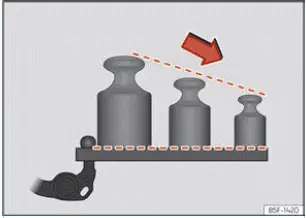
Fig. 183 Recommended weight distribution on
the rear carrier system.
Rear carrier systems are accessories mounted on the vehicle's trailer hitch to transport items outside the luggage compartment. Common examples include bicycle racks designed to carry one or more bicycles and multipurpose cargo boxes that provide additional storage space. These systems place their weight directly on the towing bracket rather than being supported by a trailer axle, so their installation and loading require particular attention.
Only install rear carrier systems that the accessory manufacturer has expressly approved for the relevant vehicle model, model year and vehicle version. A carrier that fits the tow ball physically is not necessarily suitable for the Seat Ateca, as compatibility also depends on the towing equipment and the loads it is designed to support. Before purchasing or installing a carrier, verify that its manufacturer specifies compatibility with the vehicle and its particular towing bracket.
SEAT recommends using genuine SEAT replacement parts and accessories, available through authorised SEAT dealerships. These products are intended for use with compatible vehicles and equipment. Regardless of the carrier selected, follow the manufacturer's installation instructions carefully, including the requirements for attachment, locking, loading and securing the transported items. Check that the carrier is correctly mounted before every journey and that it cannot move independently of the tow hitch.
The load placed on the towing bracket consists of both the weight of the rear carrier system itself and the weight of everything transported on it. When calculating the total load, include the carrier's structure, its mounting components and all bicycles or other cargo attached to it. The carrier's own weight reduces the amount of additional cargo that can be transported without exceeding the permitted load.
The recommended maximum load capacity for a rear carrier mounted on the trailer hitch may differ from the maximum vertical load permitted on the vehicle's coupling device. The vertical load rating describes the force that the towing bracket can withstand under its specified operating conditions, whereas the recommended capacity for a rear carrier also takes into account the way the load is positioned behind the tow ball. Consequently, a carrier must not automatically be loaded up to the full vertical load rating of the Seat Ateca towing bracket.
Under no circumstances may the maximum permissible vertical load on the towing bracket be exceeded. This limit depends on the specific vehicle model and must be checked in the relevant vehicle documentation. If the carrier manufacturer specifies a lower permitted load, that lower limit must also be respected. The combined weight of the carrier and its contents must remain within all applicable restrictions.
The effective load capacity decreases as the carrier and its cargo extend farther away from the centre of the tow ball. This is caused by the lever effect: a load positioned farther behind the coupling point produces a greater turning force on the towing bracket than the same load positioned closer to it. As a result, the permissible load for a long or deeply projecting carrier may be lower than for a more compact system, even when both use the same tow ball.
Arrange heavy objects as close as possible to the trailer hitch, as illustrated in ››› Fig. 183. When using a bicycle rack with several carrying positions, consider the weight of each bicycle and the distance of its position from the tow ball. Placing heavier items nearer the vehicle reduces the lever effect on the towing bracket and helps maintain a more favourable distribution of weight.
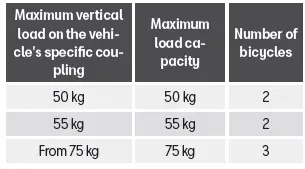
Maximum load capacity depending on the vehicle
To determine the recommended load capacity for a rear carrier fitted to your Seat Ateca, first check the maximum permissible vertical load specified for the vehicle's coupling device. This value provides the basis for identifying the applicable carrier load recommendation. Consult the following table and compare the indicated capacity with the limits specified by the carrier manufacturer. The permitted load must account for the weight of the carrier itself as well as the objects being transported.
In accordance with the UN-R-55 regulation, SEAT recommends that the number of bicycles carried on a rear-mounted rack should not exceed the recommended quantity for the particular carrier arrangement. The number of bicycles that can be transported safely depends on the approved load capacity and the configuration of the carrier. Even if additional bicycles could physically fit on the rack, the manufacturer's restrictions and the applicable vehicle limits must still be observed.
Maximum load overhang of the rear carrier system
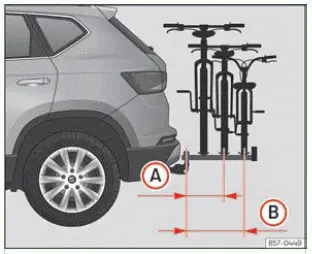
Fig. 184 Schematic representation of the
maximum load overhang of a bicycle rack for two
or three bicycles.
- For a load capacity of up to 55 kg: The maximum permitted overhang is 500 mm (approximately 19.7 inches), measured from the centre of the tow ball to the centre of the outermost support rail of the carrier system.
- For a load capacity of 75 kg: The maximum permitted overhang is 700 mm (approximately 27.6 inches), measured from the centre of the tow ball to the centre of the last support rail. This greater distance applies to the corresponding carrier configuration and permitted load capacity.
The distance by which the rear carrier extends behind the tow ball must remain within the specified limits. For a bicycle rack designed to carry two bicycles, the distance from the centre of the tow ball to the centre of the outermost support rail must not exceed 500 mm, as shown in ››› Fig. 184 A. For a three-bicycle rack, the corresponding maximum distance is 700 mm, as illustrated in ››› Fig. 184 B. These measurements are important because the forces acting on the towing bracket increase as the load is positioned farther behind the vehicle. A carrier that exceeds the permitted overhang must not be used, even if the total weight of the bicycles remains within the nominal load capacity.
WARNING Incorrect selection, installation or loading of a rear carrier system attached to the tow hook can cause the carrier to become unstable or detach from the vehicle. The weight of the carrier and its contents places considerable forces on the towing bracket, particularly during braking, cornering and travel over uneven roads. Failure to observe the permitted loads, mounting requirements or carrier dimensions may result in accidents and serious injuries.
- Make sure that the rear carrier system is suitable for your Seat Ateca and its specific towing bracket. Confirm that the carrier manufacturer approves its use with the relevant vehicle model, model year and version. Check that the total weight, load distribution and maximum overhang comply with the applicable restrictions before installing or loading the carrier.
- Read and follow all installation and operating instructions supplied by the rear carrier manufacturer. Pay particular attention to the mounting procedure, locking mechanism, load limits and methods for securing bicycles or other cargo. Before driving, verify that the carrier is firmly attached and that all transported items are properly restrained.
- Never attach a rear carrier system beneath the ball head of the trailer hitch. Because of the shape of the towing bracket, a carrier mounted in this position may slip or lose its secure attachment. Always install the carrier at the designated mounting location and in the manner specified by its manufacturer.
Note Before setting off, SEAT recommends removing as many detachable accessories as possible from bicycles or other items carried on the rear carrier system. Accessories that are not essential during transport add weight and may affect the distribution of the load. Removing them can also reduce the exposed surface area of the cargo and limit the effects of airflow while driving.
Examples include bicycle baskets, panniers, child seats and removable batteries. Taking these components off before transport reduces the overall weight carried by the rack and can improve both its aerodynamic characteristics and the position of its centre of gravity. Store the removed accessories securely inside the vehicle, taking care not to exceed the Seat Ateca's permitted loading limits.
 Electrically unlocking trailer hook
Fig. 182 Right side of the luggage
compartment: button to unlock the tow hitch.
The Seat Ateca electrically operated tow hook is integrated into the rear bumper area when it is not in use. ...
 Retrofitting a towing bracket
Fig. 185 Towing device: dimensions and
attachment points.
Distance measurements:
Mounting points on the vehicle: The designated attachment locations for securing the towing bracket ...
Other materials:
Window anti-trap function
The electric windows in the Seat Ateca are equipped with an anti-trap, or roll-back, function designed to reduce the risk of injury when the windows are closing. This protective feature monitors the closing movement and helps prevent the glass from continuing to rise when unusual resistance is encou ...
MyFord Touch® (If Equipped)
INTRODUCTION
WARNING: Driving while distracted can result in loss of vehicle
control, crash and injury. We strongly recommend that you use
extreme caution when using any device that may take your focus off
the road. Your primary responsibility is the safe operation of your
vehicle. We recommend ...
Autolamps
WARNING: In severe weather conditions, it may be necessary to
switch your headlamps on manually.
Note: If the vehicle is equipped with autolamps, it will have the
windshield wiper rainlamp feature. When the windshield wipers are
turned to low- or high-speed wiping during daylight, and the headla ...
