
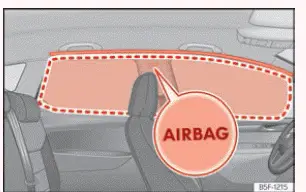
Fig. 30 Location and deployment area of the
head-protection airbag.
The head-protection airbags in the Seat Ateca are installed along both sides of the passenger compartment, above the doors, as illustrated in Fig. 30. These airbags are also known as curtain airbags because they deploy downwards alongside the side windows. Their installation positions are identified by the word "AIRBAG" on the corresponding interior trim, indicating the areas that contain the airbag assemblies.
Working together with correctly fastened seat belts, the head-protection airbag system provides additional protection for occupants' heads and upper bodies during certain severe side collisions. The seat belts help keep passengers in their intended seating positions, while the curtain airbags provide supplementary protection on the side affected by the impact. Both systems are designed to work together, so the effectiveness of the airbags depends on occupants remaining properly seated and restrained throughout the journey.
The outlined section in Fig. 30 identifies the area occupied by the head-protection airbag when it inflates. This is the airbag deployment area, and it must remain completely unobstructed. Objects placed or attached within this space could interfere with the airbag as it opens, prevent it from reaching its intended position or be propelled towards the occupants. For this reason, no accessories, equipment or other items should be mounted in the illustrated deployment zone.
During a side collision that meets the relevant activation conditions, the curtain airbag deploys on the side of the Seat Ateca where the impact occurs. The system responds to the collision characteristics detected by the vehicle's restraint control unit, allowing the airbag on the affected side to provide additional protection where it is needed.
The head-protection airbags help reduce the risk of injury to occupants sitting in the front and outer rear seats on the side exposed to the impact. By providing an additional protective surface alongside the passenger compartment, the deployed airbag helps protect the head and upper body during a severe side collision. Its effectiveness is greatest when passengers are wearing their seat belts correctly and are not leaning into the deployment area.
WARNING
- For the head-protection airbags to provide their intended level of protection, all occupants must maintain the prescribed sitting position and wear correctly fastened seat belts throughout the journey. Sitting incorrectly, leaning against the side windows or travelling without a seat belt can place an occupant too close to the deploying airbag and substantially increase the risk of injury during an accident.
- For safety reasons, the curtain airbag system must be disabled in vehicles equipped with a screen or partition dividing the passenger compartment. Such a partition may interfere with the normal deployment of the head-protection airbags, making the appropriate system adjustment necessary.
Contact a qualified technical service facility to have the required adjustment carried out. Do not attempt to deactivate or modify the curtain airbag system yourself, as incorrect work could compromise the operation of the vehicle's restraint equipment.
- Never allow another person, an animal or any object to occupy the space between an occupant of an outer seat and the deployment area of the head-protection airbag. The curtain airbag must be able to inflate fully and without obstruction to provide its intended protection. Items positioned in this area may prevent correct deployment or be thrown against occupants when the airbag inflates. For the same reason, do not attach sun blinds to the side windows unless they have been expressly approved for use in the Seat Ateca.
- Ensure that children are correctly seated and secured in suitable child restraint systems, and that their heads remain outside the head-protection airbag deployment zone shown in Fig. 30. A child leaning against a side window or positioned too close to the airbag may be struck by the inflating curtain airbag and suffer serious injuries. Children must remain properly restrained and must not be allowed to lean into the space required for airbag deployment.
- Use the built-in coat hooks only for lightweight garments. Do not leave heavy, hard or sharp-edged objects in the pockets of clothing hanging from these hooks, as such items may cause injuries during sudden vehicle movements or interfere with the deployment of the head-protection airbags.
Do not hang clothing on separate coat hangers inside the vehicle. Hangers and other rigid accessories can obstruct the curtain airbag deployment area or become dangerous if an airbag is activated during a collision.
- Head-protection airbags are designed to provide protection during a single deployment only. Once a curtain airbag has been activated in an accident, it cannot be reused and must be replaced. Have the affected restraint system inspected and the necessary components replaced by a qualified specialised workshop before relying on the system again.
- All work involving the head-protection airbag system must be carried out by a qualified specialised workshop. This includes removing or installing airbag components during other repair operations, such as work requiring the removal of the roof lining. Incorrect handling, installation or modification of these components may cause malfunctions and prevent the airbags from deploying correctly when required. Never attempt to dismantle or repair the system without the appropriate specialist equipment and technical knowledge.
- The side airbags and head-protection airbags are controlled using information from sensors located inside the front doors. To preserve the correct operation of these systems, neither the doors nor their interior panels must be modified in any way, including alterations made to install loudspeakers or other accessories. Changes to the door structure or trim may interfere with the sensor measurements required for airbag activation. If a front door is damaged, the airbag system may no longer operate correctly, even when the damage appears unrelated to the restraint equipment. All repairs, modifications and other work involving the front doors must therefore be performed by a qualified specialised workshop.
Knee airbag
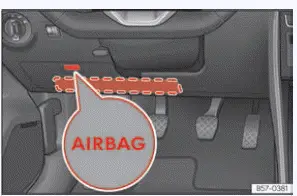
Fig. 31 On the driver side: location of the knee
airbag.
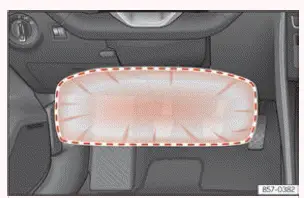
Fig. 32 On the driver side: action radius of the
knee airbag.
The driver's knee airbag is located beneath the dashboard on the driver's side of the Seat Ateca, as shown in Fig. 31. The installation area is identified by the word "AIRBAG", which marks the position of this supplementary restraint component. The knee airbag forms part of the vehicle's passive safety equipment and is designed to deploy in front of the driver's knees when the relevant collision conditions are met.
The dashed outline in Fig. 32 indicates the knee airbag's deployment area. When the airbag is activated, it inflates into this space beneath the dashboard, directly in front of the driver's knees. The illustrated area must remain clear so that the airbag can open and reach its intended position without interference.
Never place, store or attach objects within the knee airbag deployment area. Items positioned in front of the airbag could obstruct its inflation, interfere with its protective function or be propelled towards the driver during deployment. Keeping this space free from obstructions is essential for the correct operation of the knee airbag.
WARNING
- The knee airbag deploys directly in front of the driver's knees. Always keep the entire deployment area unobstructed so that the airbag can inflate correctly when activated. Objects or body positions that interfere with this space may reduce the protection provided by the airbag and increase the risk of injury during a collision.
- Never attach objects to the knee airbag cover or to any surface within its deployment area. Accessories, holders or other items fixed in this location may prevent the airbag from opening as intended or become dangerous when the airbag inflates. The cover and surrounding deployment space must remain free from modifications and attachments.
- Adjust the driver's seat so that there is a minimum distance of 10 cm (4 inches) between your knees and the location of the knee airbag. This clearance must be maintained while sitting in the correct driving position, with sufficient freedom to operate the pedals and other vehicle controls safely. Sitting too close to the knee airbag can increase the risk of injury if it deploys.
If your physical condition or body proportions prevent you from maintaining the required minimum distance while seated correctly, contact a qualified specialised workshop for advice. Do not attempt to alter the airbag cover, its installation position or the surrounding dashboard components to compensate for an unsuitable seating position.
 Side airbags
Fig. 28 Side airbag in driver's seat.
Fig. 29 Illustration of completely inflated side
airbag on the left side of the vehicle.
The side airbags in the Seat Ateca are integrated into the ...

Other materials:
Police Package Equipment
SPECIFICATIONS
Torque Specifications
DESCRIPTION AND OPERATION
Lighting, Siren and Speaker System
Spotlamps
Overview
The spotlamps provide an exterior illumination source that can be directed by an
interior control handle to illuminate the desired object.
System Operation
The LH and RH spotl ...
Introduction
Travel Assist combines Adaptive Cruise Control (ACC) with the adaptive lane guidance function to provide coordinated assistance with speed, following distance and steering. By using these two systems together, Travel Assist can support the driver during suitable driving conditions while reducing the ...
Pulling out the key blade
Fig. 45 Vehicle key: extracting the emergency
key.
The Seat Ateca vehicle key contains a removable emergency key blade that can be used to lock or unlock the vehicle manually when the remote control is unavailable or cannot be operated. The mechanical key is stored inside the remote control ...
