
Travel Assist combines Adaptive Cruise Control (ACC) with the adaptive lane guidance function to provide coordinated assistance with speed, following distance and steering. By using these two systems together, Travel Assist can support the driver during suitable driving conditions while reducing the need for continuous minor adjustments to the accelerator, brakes and steering. However, it remains a driver assistance function rather than an autonomous driving system, and its operation is subject to the limitations of both ACC and Lane Assist.
Within its defined operating limits, Travel Assist can maintain the following distance selected by the driver from a vehicle travelling ahead while also helping the Seat Ateca remain in the preferred position within its lane. The system uses the available information about surrounding traffic and detected lane boundaries to coordinate longitudinal and lateral assistance. Its ability to provide this support depends on the road layout, sensor visibility, vehicle speed and other operating conditions.
Travel Assist relies on the same sensors used by Adaptive Cruise Control and Lane Assist. These sensors provide the information required to detect vehicles ahead and recognise lane boundaries, allowing the combined function to regulate speed and assist with steering. Consequently, any restriction affecting the underlying sensor systems can also influence the availability or performance of Travel Assist.
Before using Travel Assist, carefully read the instructions for ACC and Lane Assist, including their warnings, operating conditions and technical limitations. The restrictions described for these individual systems also apply when they are used together through Travel Assist. The driver must understand the indications displayed by the Seat Ateca and remain prepared to intervene whenever the assistance provided is insufficient or inappropriate.
How to know if the vehicle is fitted with Travel Assist
The Seat Ateca is equipped with Travel Assist if its multifunction steering wheel includes the  button. This dedicated control identifies the availability of the function and allows the driver to operate Travel Assist through the steering wheel. If the button is not present, the vehicle does not have the Travel Assist equipment described in this section.
Speed range
Depending on the equipment installed in the vehicle, Travel Assist can regulate speed from 0 km/h (0 mph). This allows suitably equipped versions of the system to provide assistance even when the vehicle is stationary or moving at very low speeds. The desired cruising speed can be set from 30 km/h (20 mph). The actual availability of regulation depends on the operating conditions and the capabilities of the vehicle's specific equipment.
Driving with Travel Assist
When Travel Assist is active, it coordinates automatic acceleration, braking and steering assistance within the limits of the system. This allows the Seat Ateca to adjust its speed in response to detected traffic ahead while receiving steering assistance intended to maintain the selected lane position. Depending on the equipment and driving situation, Travel Assist may also slow the vehicle to a complete stop behind another vehicle that has stopped and then move off again automatically when the conditions for restarting are satisfied.
The driver can override the assistance provided by Travel Assist at any time. Manual steering, acceleration or braking remains available whenever the driving situation requires direct intervention. The system is intended to support the driver, not prevent independent control of the vehicle. If the automatic response is unsuitable, the driver must immediately take the necessary action to maintain a safe speed, following distance and lane position.
Status display
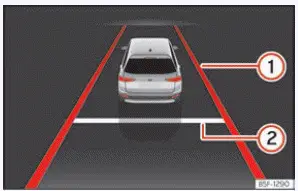
Fig. 125 On the instrument cluster display:
display of active regulation (schematic
representation).
- The colour of the displayed lane markings indicates the current operating status of the adaptive lane guidance function. These visual indications allow the driver to distinguish between active steering assistance, available guidance and a passive operating state. The meaning of each colour is as follows:
- Yellow: The adaptive lane guidance function is actively intervening in the steering. The highlighted marking indicates that the system is providing corrective assistance in response to the vehicle's position relative to the detected lane boundary.
- White: The adaptive lane guidance function is available. The relevant lane boundary has been recognised, and the system is ready to provide steering assistance when the required conditions are met.
- Grey: The adaptive lane guidance function is in a passive state. Although the lane boundary may still be represented on the display, active steering assistance is not currently being provided for that indication.
- The selected following distance is displayed to show the separation that Travel Assist is configured to maintain from a detected vehicle ahead. This setting is associated with the Adaptive Cruise Control function and helps the driver monitor the distance regulation being used during assisted driving.
Depending on the Seat Ateca's equipment and instrument cluster configuration, the Travel Assist display may provide additional information about the surrounding road and traffic. This can include dashed lane markings and representations of vehicles detected ahead. These details help the driver understand which road features and vehicles are being recognised by the assistance systems, although the display does not necessarily represent every object or road user in the surrounding area.
The current operating status of Travel Assist is also indicated by control lamps in the instrument cluster. Their appearance distinguishes between combined speed and steering assistance, ACC regulation without active lane guidance, and a deactivated system. The driver should check these indications whenever the behaviour of Travel Assist changes.
 Green indicator lamp: Travel Assist is active, and both Adaptive Cruise Control and the adaptive lane guidance function are operating. The system is providing combined assistance with speed, following distance and steering, subject to its normal operating limitations. The driver must continue supervising both functions.
 Partially green indicator lamp: Travel Assist is active and Adaptive Cruise Control is regulating speed and following distance, but the adaptive lane guidance function is passive. In this state, the driver must provide the steering input needed to maintain the vehicle's lane position while ACC continues its available regulation.
 Grey indicator lamp: Travel Assist is deactivated and is not providing its combined regulation functions. The driver is responsible for controlling the accelerator, brakes and steering without relying on Travel Assist assistance. The grey indication should not be mistaken for confirmation that active regulation is taking place.
Driver intervention prompt
If the driver removes their hands from the steering wheel while Travel Assist is operating, the system requests manual steering intervention after a few seconds. The request is communicated through a message in the instrument cluster accompanied by audible warning signals. These warnings remind the driver that Travel Assist requires continuous supervision and that the steering wheel must remain under the driver's control. The driver should respond promptly by taking hold of the steering wheel and resuming active responsibility for steering.
If the driver does not respond to the intervention request, Travel Assist is deactivated. The system will no longer continue providing its normal combined speed and lane guidance assistance. The driver must therefore take control immediately rather than assuming that the vehicle will continue steering or regulating its movement automatically.
Depending on the equipment fitted to the Seat Ateca, Emergency Assist may activate when Travel Assist is deactivated because the driver has not responded. The availability of this function depends on the vehicle's configuration and the required operating conditions. Its possible activation does not reduce the driver's obligation to remain attentive and respond to intervention requests without delay.
WARNING Travel Assist uses advanced driver assistance technology, but it cannot overcome the laws of physics or operate beyond its technical and environmental limitations. Incorrect, careless or unintended use of Travel Assist can cause serious accidents and injuries. The function is not an autonomous driving system and does not replace the driver's attention, judgement or responsibility for controlling the Seat Ateca. Even when Travel Assist is actively regulating speed and steering, the driver must remain prepared to intervene immediately.
- Observe all operating restrictions and safety instructions relating to Adaptive Cruise Control (ACC) and Lane Assist. Travel Assist combines these functions and is therefore affected by the limitations of both systems. If either function cannot operate reliably, the combined assistance may be reduced, interrupted or unavailable. Do not assume that Travel Assist can compensate for a limitation affecting ACC or lane guidance.
- Always adapt the vehicle's speed and following distance to the prevailing visibility, weather, road surface and traffic conditions. The distance selected through ACC may be unsuitable when braking distances increase or traffic conditions change unexpectedly. Maintain sufficient space to react safely and reduce speed manually whenever the automatic setting is inappropriate.
- Do not use Travel Assist when visibility is poor, on steep or winding roads, or when the road surface is slippery because of snow, ice, rain or loose gravel. The function should also not be used on flooded roads. These conditions can interfere with sensor detection, reduce available traction or require steering and braking responses beyond the system's capabilities. The driver must control the vehicle directly in such circumstances.
- Do not use Travel Assist when driving off-road or on roads without a firm surface. The system is designed for use on paved roads and is not intended to provide reliable speed or steering assistance on loose, uneven or unsuitable terrain. Driving outside its intended operating environment can lead to inappropriate responses or a loss of assistance.
- Travel Assist does not react to people, animals or vehicles crossing the vehicle's path, or to vehicles approaching head-on in the same lane. The system must not be relied upon to identify or avoid these hazards. The driver must continuously monitor the road and take appropriate braking or steering action whenever such a situation develops.
- Apply the brakes immediately if Travel Assist does not reduce the vehicle's speed sufficiently. Do not wait for the system to increase braking automatically when the available distance is becoming unsafe. The driver remains responsible for preventing a collision and must intervene whenever the automatic response is inadequate.
- Brake immediately if the instrument cluster instructs you to do so or if Travel Assist fails to slow the Seat Ateca sufficiently for the traffic situation. A displayed braking request requires prompt driver action. Continue applying the brakes as necessary to reduce speed or bring the vehicle to a safe stop.
- If the vehicle continues moving forward when movement is not intended, particularly after a warning instructing the driver to brake, apply the foot brake immediately. Do not assume that Travel Assist will hold the vehicle stationary indefinitely or prevent further movement without driver intervention.
- Where possible, avoid wearing gloves while driving with Travel Assist active.
The system may interpret the use of gloves as an absence of driver activity, even when the driver is holding the steering wheel. This can result in intervention requests or affect the continued availability of Travel Assist. Ensure that the system can recognise the required driver interaction.
- If a driver intervention request appears in the instrument cluster, immediately resume direct control of the vehicle. Take hold of the steering wheel, assess the traffic situation and operate the steering, accelerator or brakes as necessary. Do not ignore visual or audible warnings requesting driver involvement.
- Keep your hands on the steering wheel at all times so that you can control the vehicle's direction without delay. Travel Assist can provide steering assistance, but it cannot guarantee that the Seat Ateca will remain correctly positioned within its lane. The driver is always responsible for maintaining the vehicle's lane position and carrying out safe steering manoeuvres.
- Remain prepared to adjust the vehicle's speed manually whenever necessary. Travel Assist may not recognise every change in traffic conditions or select a speed suitable for the road ahead. The driver must monitor the actual speed and intervene immediately if acceleration, deceleration or the selected cruising speed is inappropriate.
 Travel Assist
...
 Operating Travel Assist
Fig. 126 Left side of the multifunction steering
wheel
Switch on and start regulation
1. While driving with Adaptive Cruise Control (ACC) activated, press the
button on the multi ...
Other materials:
Description and operation
The Start-Stop system is designed to reduce unnecessary fuel consumption and carbon dioxide (CO2) emissions by limiting the time the engine spends idling. It is particularly useful in traffic situations involving frequent stops, such as waiting at traffic lights or moving through congested roads. By ...
Part numbers
1 Refer to scheduled maintenance information for the appropriate
intervals for changing the spark plugs.
Note: Replace the spark plugs with ones that meet Ford material and
design specifications for your vehicle, such as Motorcraft® or equivalent
replacement parts. The customer warranty may ...
Cleaning the interior
WARNING: Do not use cleaning solvents, bleach or dye on the
vehicle’s safety belts, as these actions may weaken the belt webbing.
WARNING: On vehicles equipped with seat-mounted airbags, do
not use chemical solvents or strong detergents. Such products
could contaminate the side airbag system a ...
