
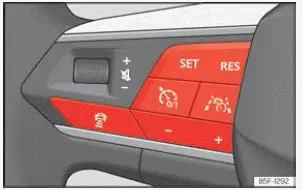
Fig. 126 Left side of the multifunction steering
wheel
Switch on and start regulation
1. While driving with Adaptive Cruise Control (ACC) activated, press the
 button on the multifunction steering wheel.
The Seat Ateca switches from ACC to Travel Assist. This changes the selected assistance function from conventional adaptive cruise control to the combined system, which can provide both speed regulation and adaptive lane guidance when the necessary operating conditions are satisfied.
After Travel Assist has been selected, its operating status depends on whether ACC was already regulating the vehicle and whether the system can detect suitable lane boundaries. The transition therefore does not always result in immediate activation of every Travel Assist function. Depending on the driving situation, the system responds as follows:
- If ACC was already regulating the vehicle's speed, Travel Assist continues using the current cruising speed and the previously selected following distance from the vehicle ahead. The existing ACC settings are retained during the transition, so the driver does not need to select them again simply because Travel Assist has been activated.
When the camera recognises the relevant lane markings and the conditions for adaptive lane guidance are met, Travel Assist also provides steering assistance to help maintain the Seat Ateca's position within the detected lane. This assistance works alongside the existing speed and distance regulation. The driver must nevertheless keep control of the steering wheel and remain prepared to correct the vehicle's direction whenever necessary.
- If ACC was not actively regulating when Travel Assist was selected, the combined assistance function remains selected but enters a passive operating state. In this condition, Travel Assist is not yet regulating the vehicle's speed or providing its normal combined assistance. A further driver action is required to start regulation when the operating conditions permit.
Press the  button to request activation of Travel Assist regulation.
Travel Assist then changes to the appropriate active operating status, provided that the current driving situation satisfies the system's requirements. The available assistance may include both adaptive cruise control and lane guidance, or speed regulation with lane guidance temporarily passive, depending on the conditions detected by the vehicle.
The instrument cluster displays the indicator lamp corresponding to the current Travel Assist status. An accompanying message also appears to inform the driver about the selected function or its operating state. Check these indications to confirm which assistance functions are actually available rather than assuming that both speed and steering regulation are active.
Interrupting regulation
1. Briefly press the  button on the multifunction steering wheel to interrupt the current Travel Assist regulation.
Alternatively, press the brake pedal. Applying the brakes allows the driver to interrupt automatic regulation and take direct control of the vehicle's deceleration. This may be necessary when traffic conditions change or the driver wishes to stop using the assistance temporarily.
The previously selected following-distance setting remains stored after regulation is interrupted. If Travel Assist is subsequently activated again, the saved distance setting is still available. However, the driver must always check that the selected distance remains appropriate for the current speed, road surface and traffic conditions.
Switch to ACC
1. Press the  button on the multifunction steering wheel.
The Seat Ateca switches from Travel Assist back to Adaptive Cruise Control. The resulting ACC operating status depends on the driving situation and whether the conditions for speed regulation are satisfied. After switching, the combined Travel Assist lane guidance function is no longer being used, and the driver must provide the steering input required to maintain the vehicle's position within its lane.
Making other adjustments
All other Travel Assist settings and adjustments are operated in the same way as the corresponding Adaptive Cruise Control functions. This includes the controls used to manage the selected speed and following distance. Refer to the ACC operating instructions for the relevant procedures, and remember that any adjustment must remain suitable for the prevailing road and traffic conditions.
Troubleshooting
 Travel Assist is not
available or does
not work as expected
If Travel Assist becomes unavailable or a malfunction is detected, the corresponding control lamp illuminates yellow. A warning message also appears in the Seat Ateca instrument cluster to indicate that the function cannot currently provide its expected assistance. The cause may involve the sensors used by ACC or Lane Assist, a temporary operating restriction or a fault affecting the combined system.
- A sensor fault may be preventing Travel Assist from operating correctly. Since the function uses the same detection systems as ACC and Lane Assist, check the possible causes and recommended solutions described in the sections covering those functions. Problems affecting radar detection or camera visibility can also restrict Travel Assist.
- A fault or malfunction may have occurred in the system. Switch off the engine and restart it to check whether the warning disappears and Travel Assist becomes available again. If the warning remains active, do not rely on the function to regulate speed or provide steering assistance.
- The current driving conditions may exceed the operating limits of Travel Assist. This can occur when the system cannot satisfy the requirements for reliable regulation or lane guidance. The driver must continue controlling the vehicle manually until the necessary conditions are restored.
- If the warning persists or Travel Assist continues to behave unexpectedly, have the system inspected by a qualified specialist workshop. SEAT recommends contacting an authorised SEAT dealership, where the relevant assistance systems can be checked and the cause of the malfunction identified.
 Grip the steering wheel
The warning lamp illuminates white, and a corresponding message appears in the instrument cluster. This indication is an initial request for the driver to resume the required steering wheel contact. Travel Assist remains a supervised assistance function and requires the driver to be ready to steer at all times.
- The driver has released the steering wheel for several seconds, and the system has detected insufficient steering wheel contact.
Take hold of the steering wheel immediately and resume active control of the Seat Ateca. Continue monitoring the road and maintain the vehicle's correct lane position. Do not wait for the warning to become more urgent before responding.
 Grip the steering wheel
The warning lamp illuminates red, and an urgent intervention message appears in the instrument cluster. This indicates that the driver must immediately take control of the steering wheel because the system has detected a prolonged absence of the required driver interaction or has reached an operating limit.
Depending on the circumstances, the visual warning may be accompanied by an audible signal or a vibration of the steering wheel. These additional warnings are intended to draw the driver's attention to the need for immediate intervention. The driver must not continue relying on automatic steering assistance when this warning is displayed.
- The steering wheel has been released for too long, or Travel Assist has reached the limits within which it can continue operating. Immediately grip the steering wheel, take responsibility for steering and adjust the vehicle's speed or direction as necessary. Failure to respond may result in the assistance function being deactivated.
Travel Assist disconnects automatically
- An internal fault or malfunction may cause Travel Assist to switch off automatically. If this occurs, the driver must take over the functions previously being assisted by the system. Switch off the engine and restart it to determine whether the malfunction was temporary and whether the function becomes available again.
- If Travel Assist continues to disconnect automatically or the problem remains after restarting the vehicle, consult a qualified specialist workshop. SEAT recommends visiting an authorised SEAT dealership. Until the fault has been resolved, do not assume that the combined speed and steering assistance will remain available during driving.
Regulation is interrupted unexpectedly
- The turn signal has been activated. Operating the direction indicator can affect Travel Assist regulation because the system recognises the driver's intention to change lanes. If regulation is interrupted after using the turn signal, check the current assistance status in the instrument cluster and maintain direct control of the vehicle as necessary.
 Introduction
Travel Assist combines Adaptive Cruise Control (ACC) with the adaptive lane guidance function to provide coordinated assistance with speed, following distance and steering. By using these two systems ...
 Emergency Assist
...
Other materials:
Jump start: description
Fig. 193 Wiring diagram for vehicles without a
start/stop system
Fig. 194 Wiring diagram for vehicles with a start/
stop system.
The diagrams illustrate the correct arrangement of the jump leads when starting a Seat Ateca with a discharged 12-volt battery. The connection proc ...
Information about the terms of use
The maintenance intervals and service schedules specified for the Seat Ateca are generally established on the assumption that the vehicle is operated under normal driving and environmental conditions. These intervals are intended to provide appropriate maintenance for the vehicle when it is used in ...
Specifications, Description and Operation
SPECIFICATIONS
Material
Torque Specifications
DESCRIPTION AND OPERATION
Glass, Frames and Mechanisms
Overview
The accessory delay relay, located in the BCM, provides voltage for the
operation of the power windows and the roof opening panel (if equipped). Refer
to Delayed Accessory Power.
St ...
