
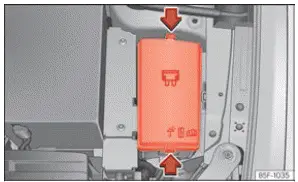
Fig. 202 In the engine compartment: lid of the
fuse box.
The engine compartment contains a separate fuse box protecting electrical circuits associated with equipment installed in this area and other vehicle systems. Its protective lid is secured by locking tabs and must be removed carefully to gain access to the fuses. Before opening the fuse box, ensure that the ignition and electrical consumers are switched off.
To open the engine compartment fuse box
- Open and raise the bonnet, following the procedure described on page 305. Make sure the bonnet is properly supported before working inside the engine compartment, and observe the relevant safety precautions.
- Locate the fuse box cover and press the retaining tabs to release its locking mechanism, as illustrated in Fig. 202. Apply pressure only to the designated tabs to avoid damaging the cover or its fasteners.
- Once the locking tabs have been released, carefully lift the cover away from the fuse box. Place it somewhere clean and dry while inspecting the fuses, and prevent dirt or moisture from entering the exposed housing.
- To reinstall the cover, position it correctly over the fuse box and ensure that it is properly aligned. Press the locking tabs into place until they engage with an audible click. Check that the lid is securely fastened and that its edges are correctly seated to maintain protection against contamination.
Replace a blown fuse
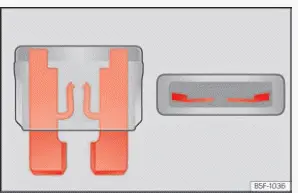
Fig. 203 Image of a blown fuse.
A blown fuse interrupts the electrical circuit when the current exceeds the fuse's designed limit. Before installing a replacement, confirm that the fuse has failed and that the original cause of the problem has been addressed. Use only a replacement with the same amperage rating and dimensions as the removed fuse.
Preparations
- Switch off the ignition, all vehicle lighting and every electrical device that can be turned off. This reduces the possibility of accidental short circuits or electrical damage while the fuse is being removed or replaced.
- Open the fuse box containing the fuse that needs to be inspected. Follow the appropriate access procedure for the interior or engine compartment fuse box, and keep the surrounding area clean and dry.
Recognise a blown fuse
A fuse can usually be identified as blown by examining the metal conductor inside its body. When the fuse fails, this internal metal strip melts and breaks the electrical connection, as illustrated in Fig. 203. Depending on the design and condition of the fuse, the break may be visible through its housing.
- Use a torch to illuminate the fuse and inspect the internal metal strip carefully. Look for a visible break or melted section indicating that the fuse has blown. If its condition cannot be determined reliably by visual inspection, have the fuse checked using appropriate equipment.
To replace a fuse
- Carefully remove the affected fuse from its holder. Avoid damaging the surrounding fuses, terminals or fuse box housing while extracting it.
- Install a replacement fuse with exactly the same amperage rating, colour identification, markings and physical size as the original. Ensure that the replacement is seated correctly in its holder. Never use a fuse with a higher current rating or attempt to repair the blown fuse.
- After replacement, reinstall the fuse box cover or close the fuse box lid, as appropriate. Check that the cover is correctly positioned and securely fastened before switching the ignition or electrical equipment back on.
Fuse placement
The following fuse arrangement information identifies the locations and assignments of the fuses covered in this section of the Seat Ateca owner's manual. Fuse positions and the equipment protected by individual circuits may vary according to the vehicle's version and installed options. Always verify the correct fuse location and rating before carrying out a replacement.
Fuses in the vehicle interior
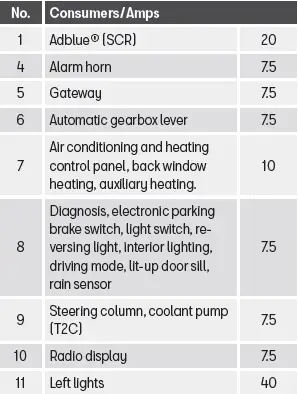
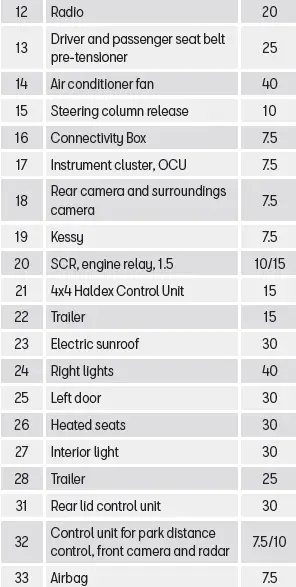
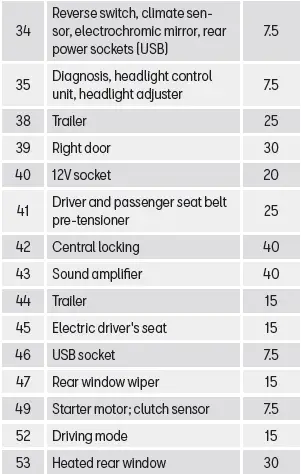

The interior fuse allocation charts provide information about the fuses associated with electrical equipment inside the vehicle and other protected circuits. Use the relevant fuse position and rating information to identify the correct component before attempting replacement. The presence of a particular fuse or electrical function depends on the equipment fitted to the vehicle.
Fuse arrangement in engine compartment
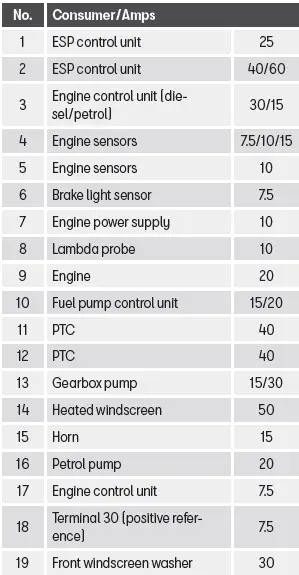
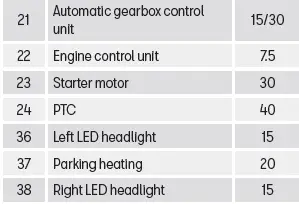
The engine compartment fuse arrangement charts identify the fuse positions and corresponding electrical circuits included in the published reference information. When investigating an electrical fault, consult the appropriate chart to locate the relevant fuse and determine its specified amperage. Do not assume that every position shown is occupied or that all listed equipment is installed on a particular Seat Ateca.
Note
- The vehicle contains additional fuses that are not included in the tables or illustrations provided in this chapter. These fuses may be associated with electrical systems requiring specialist access or servicing and should only be replaced by a qualified workshop.
- Fuse positions that are not occupied are omitted from the allocation tables. An empty position does not necessarily indicate that a fuse is missing, as some locations may be unused depending on the vehicle's configuration.
- Some of the electrical equipment and systems listed in the fuse allocation tables are fitted only to particular versions of the Seat Ateca or are available as optional equipment. Consequently, the actual fuse arrangement may differ between vehicles with different specifications.
- The fuse assignments and equipment information shown were correct when the manual was prepared for publication. Subsequent changes to vehicle specifications or electrical equipment may result in differences from the published tables. If there is uncertainty about a fuse location or rating, consult a qualified specialist workshop.
 Fuses inside the vehicle
Fig. 200 On the dash panel on the driver side:
fuse box cover.
Fig. 201 Right-hand drive vehicles: fuse box
cover under the passenger side dash panel.
The interior fuse box is ...
 Changing bulbs
...
Other materials:
Partition net
Using the net partition
Fig. 173 Net partition fitted.
The partition net is designed to help prevent luggage and other objects in the boot from moving forwards into the passenger compartment. It provides a barrier between the load area and the occupied part of the Seat Ateca, reducing the ...
Operating Travel Assist
Fig. 126 Left side of the multifunction steering
wheel
Switch on and start regulation
1. While driving with Adaptive Cruise Control (ACC) activated, press the
button on the multifunction steering wheel.
The Seat Ateca switches from ACC to Travel Assist. This changes the ...
Starting System
SPECIFICATIONS
General Specifications
Torque Specifications
DESCRIPTION AND OPERATION
Starting System
Starting System - without Push Button Start
Overview
The starter system controls the cranking of the engine. The starter motor is
enabled by the starter relay when the relay is activated by the& ...
