
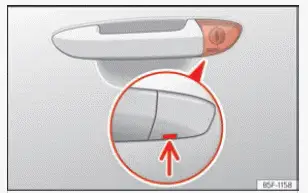
Fig. 52 Driver's door handle: hidden lock
cylinder.
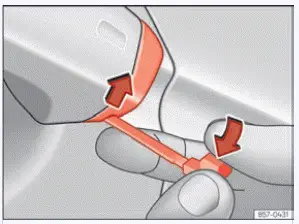
Fig. 53 Driver's door handle: pry the cover
open.
If the central locking system stops working, the driver's door of the Seat Ateca can still be locked or unlocked mechanically. The door handle incorporates a concealed lock cylinder that can be operated using the emergency key blade stored inside the vehicle key. This provides an alternative method of gaining access to the vehicle when electronic locking or unlocking is unavailable.
As a general rule, manually locking the driver's door also locks the other vehicle doors. However, the actual operation may depend on the condition of the central locking system, particularly if the electrical supply or locking mechanism has failed. Check that the other doors are secured when using the mechanical locking procedure.
When the driver's door is unlocked manually, only that door is released. The remaining doors stay locked until the appropriate unlocking operation is carried out. If the Seat Ateca is equipped with an anti-theft alarm, observe the instructions relating to mechanical unlocking, as opening the door without electronic authorisation may trigger the alarm.
- Remove the emergency mechanical key from the vehicle key housing. This key blade is required to access and operate the concealed lock cylinder in the driver's door handle.
- Insert the emergency key into the opening at the lower edge of the protective cover on the driver's exterior door handle. Carefully lift the lower part of the cover upwards, as illustrated in Fig. 53, to release it and expose the mechanical lock cylinder. Avoid using excessive force when removing the cover.
- Insert the emergency key into the exposed lock cylinder and turn it in the appropriate direction to unlock or lock the vehicle. Once the required operation has been completed, remove the key and make sure the door can be operated as intended.
Special characteristics
- When a vehicle equipped with an anti-theft alarm is unlocked mechanically, the alarm system initially remains active. The mechanical unlocking operation alone does not provide the same electronic authorisation as unlocking with the remote control key, although the alarm is not necessarily triggered immediately.
- After opening the driver's door, you have 15 seconds to switch on the ignition before the anti-theft alarm is activated. This period allows the system to recognise an authorised key following mechanical entry. If the ignition is not switched on within the specified time, the alarm is triggered. The applicable delay may vary according to the vehicle's market specification.
- Switch on the ignition using the valid vehicle key. The electronic immobiliser recognises the authorised key and deactivates the anti-theft alarm system. Once the key has been recognised, the vehicle's normal electronic locking functions can be used according to the condition of the system.
Note Locking the Seat Ateca manually with the emergency key blade does not activate the anti-theft alarm. Although the mechanical locking operation secures the relevant doors, it does not arm the alarm system in the same way as locking the vehicle electronically using the remote control or the Keyless Access system.
Emergency lock of doors without lock cylinders
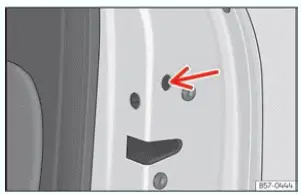
Fig. 54 Locking the door manually.
If the central locking system fails or the Seat Ateca's battery becomes discharged, doors that do not have an external mechanical lock cylinder must be locked individually. This emergency procedure allows the front passenger door and rear doors to be secured even when the normal central locking controls cannot operate.
The emergency locking mechanism is located on the front edge of the front passenger door and the rear doors. It is accessible only when the corresponding door is open, as the locking slot is concealed when the door is closed against the vehicle body. The position of the emergency locking slot is shown in Fig. 54.
- Insert the emergency key into the locking slot indicated by the arrow in Fig. 54. For a door on the right-hand side of the vehicle, turn the key clockwise, to the right, as far as it will go. For a door on the left-hand side, turn the key anticlockwise, to the left, until it reaches its stop. This operates the mechanical emergency locking mechanism for the selected door.
After the emergency locking mechanism has been operated and the door is closed, that door can no longer be opened from outside. To unlock and open it from inside the Seat Ateca, pull the corresponding interior door handle once. This releases the manual lock and allows the door to be opened without using the electronic central locking system.
 Introduction
The doors and rear lid of the Seat Ateca can be locked or unlocked manually if the normal electronic locking system is unavailable. Manual operation may be necessary when the vehicle key is damaged, t ...
 Child lock
Fig. 55 Left door child lock.
The child safety lock prevents the rear doors of the Seat Ateca from being opened using their interior door handles. Its primary purpose is to reduce the risk of ch ...
Other materials:
Specifications, Description and Operation
SPECIFICATIONS
Material
DESCRIPTION AND OPERATION
Body
WARNING:
Collision damage repair must conform to the instructions contained in this
workshop manual. Replacement components must be new, genuine Ford Motor Company
parts. Recycled, salvaged, aftermarket or reconditioned parts (includin ...
Warranty
Warranty for fault-free operation
Authorised SEAT service centres help ensure that new vehicles are delivered in proper working condition and meet the manufacturer's quality requirements. The warranty covering your Seat Ateca is subject to the terms and conditions established at the time of purch ...
SEAT Digital Cockpit
Fig. 2 SEAT Digital Cockpit on the instrument
panel (classic view).
Engine coolant temperature display. Indicates the temperature of the engine coolant, allowing the driver to monitor the engine's thermal operating condition.
Revolution counter. Displays the engine's rotational speed i ...
