
Actions to take in the event of a fire or accident
In the event of a road accident or vehicle fire, protecting yourself and the other occupants must take priority. To reduce the risk of further accidents or injuries, follow the safety measures listed below in the order given, as far as the circumstances allow. Remain alert to surrounding traffic, damaged vehicles and other potential hazards, and avoid taking actions that could place anyone in additional danger.
- Switch off the engine as soon as it is safe to do so. This is one of the first precautions to take after bringing the Seat Ateca to a stop following an accident or discovering a fire.
- If possible, activate the hazard warning lights to alert approaching drivers to the emergency. The flashing direction indicators help make the stationary vehicle more noticeable to other road users.
- Observe the roadside emergency regulations applicable in the country where the incident occurs. Depending on local requirements, this may involve wearing a reflective safety vest and using warning triangles, an approved warning beacon or other prescribed warning equipment. Do not expose yourself to moving traffic while attempting to place warning devices.
- If necessary, help occupants and other affected people move away from the immediate danger area, provided this can be done safely. Give first aid where required and within your ability, while taking care not to put yourself or others at further risk.
- Contact the emergency services and report the incident. Provide the information requested by the emergency operator, including the location of the accident or fire and any known injuries or immediate dangers.
- Move to a safe distance from the accident scene and remain there while waiting for the emergency services to arrive. Keep other occupants away from the vehicle and from areas where passing traffic or the incident itself could present additional hazards.
- If the vehicle catches fire, do not attempt to extinguish the flames yourself and do not remain close to the Seat Ateca. Move away from the burning vehicle immediately and keep other people at a safe distance until the emergency services take control of the situation.
WARNING
For your own safety and the protection of other road users, never disregard this emergency checklist. Failing to take the necessary precautions after an accident or during a vehicle fire can expose occupants and bystanders to further collisions, serious injuries or other dangerous consequences. Follow the recommended sequence whenever the situation permits, while giving immediate priority to escaping any direct threat to life.
- Carry out all applicable actions in the checklist and continue to observe general safety precautions throughout the emergency. Assess the surrounding conditions before approaching the vehicle, assisting other people or moving around the accident scene. Do not perform an action if doing so would expose you to an immediate and avoidable danger.
WARNING
A vehicle fire can create extremely dangerous conditions. An explosion may occur, and burning vehicle components or materials may release substances and gases that are harmful to health. Exposure to these hazards can cause severe injuries, even without direct contact with the flames. Leave the danger area promptly and allow trained emergency personnel to deal with the fire.
- Never remain near a burning vehicle. Keep yourself, passengers and other people away from the fire, and do not return to the Seat Ateca to retrieve personal belongings while the danger remains. Wait at a safe distance for the emergency services to arrive.
Information call, Assistance call and Emergency call service
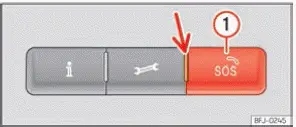
Fig. 42 On the roof console: controls for voice
services
Depending on the vehicle's equipment specification, the Seat Ateca may be fitted with an emergency call system integrated into the overhead roof console. This system provides access to voice communication services intended for obtaining information, requesting assistance after a breakdown or contacting emergency services when necessary. The available functions depend on the equipment installed in the vehicle.
The following voice services can be activated using the corresponding buttons  ,
 and
 , as illustrated in Fig. 42. Each button is associated with a particular service, allowing the driver or another occupant to request the appropriate type of assistance directly from the vehicle.
- Information call: Establishes contact with the SEAT customer care service for information and customer assistance.
- Assistance call: Provides a means of requesting specialised roadside support when the vehicle has broken down or requires technical assistance.
- Emergency call service: Enables an emergency call to be initiated when urgent assistance is required following an accident or another serious incident.
A control unit built into the vehicle manages the communication process and establishes the connection required for the selected service. The system uses the vehicle's installed communication equipment to initiate the call, so occupants can access the available voice services through the controls in the roof console.
When one of these voice services is activated, the system establishes a connection with the corresponding telephone service. Once the connection has been made, voice communication can take place with the relevant operator or service provider. The destination and purpose of the call depend on whether the information, assistance or emergency function has been selected.
Control lamp.
A control lamp is integrated into the roof console control unit, at the position indicated by the arrow in Fig. 42. This indicator provides information about the operating condition and availability of the eCall system. Its colour and flashing pattern allow the driver to distinguish between normal operation, an unavailable service, a system malfunction and an active voice connection.
- Off: The eCall service is unavailable. When the indicator is not illuminated, the system does not indicate that the emergency call function is ready for use.
- Flashes in red, approximately 20 seconds after switching on the ignition: The eCall service has been deactivated. This flashing indication identifies the deactivated state rather than normal service availability.
- Lights up red: A malfunction has been detected in the system. The eCall service may still be available, but its operation is subject to certain restrictions. SEAT recommends having the system inspected by a qualified specialised workshop to determine the cause of the fault and carry out any necessary repairs.
- Lights up green: The eCall service is available, indicating that the system is in its normal operational state.
When the control lamp remains illuminated in green, the emergency call system is ready for use in the vehicle. This indication confirms the system's reported availability, although the actual connection remains dependent on the conditions required for the service to operate.
- Flashes green: A voice connection is currently in progress. The flashing green indicator shows that the system has entered an active communication state rather than simply remaining on standby.
 Assistance call
The assistance call function allows occupants to contact a specialised breakdown assistance service directly from the Seat Ateca. This function is intended for situations in which the vehicle has developed a fault or has become immobilised and technical assistance is required. Using the dedicated call control, the driver can request help without having to establish the connection manually through a separate telephone.
Alongside the voice connection, the system transmits certain vehicle information to support the assistance request. This may include the vehicle's current location, allowing the service provider to identify where help is needed. The transmitted information accompanies the call and can assist the operator in arranging the appropriate response to the breakdown.
 Information call
The information call function establishes a telephone connection with the customer care service of SEAT, S.A. This service provides a direct communication channel for occupants who wish to contact SEAT customer support. The call is initiated through the corresponding roof console control, using the vehicle's built-in communication system.
Note Calls made through the breakdown assistance or information services may result in additional charges on your telephone bill. The applicable costs depend on the service and the relevant telephone arrangements, so these calls should not automatically be assumed to be free of charge.
 Types of emergency call
- Public (mandatory by law): This type of emergency call connects the vehicle with the public emergency services in the country where it is being driven. Communication is handled through that country's emergency service system and in the language used by the local emergency services. The purpose of the public emergency call is to provide access to the relevant national emergency response service when urgent assistance is required.
- Private: A private emergency call is directed to a SEAT call centre rather than directly to the national emergency services. This service can provide additional customer-oriented assistance, including communication in the language selected in the vehicle's infotainment system. If the occupant prefers to contact the public emergency services instead, the private emergency call can be cancelled at any time so that assistance can be requested from the emergency services of the country in which the vehicle is located. This allows the user to choose between the private SEAT emergency call service and the relevant public emergency response system.
Private emergency call
If the private emergency call service is included in the available service package for the Seat Ateca, this function is activated by default for a limited period. During that period, the system provides access to the SEAT emergency call centre when assistance is required following an accident or another emergency. Availability depends on the services provided for the vehicle and the applicable service conditions.
- The private emergency call service is designed to help arrange assistance as quickly as possible in an emergency. By establishing direct communication with an emergency coordination centre, the system allows the situation to be assessed and the necessary response to be organised without unnecessary delay.
- When the private emergency call function is activated, the vehicle establishes a communication connection with the SEAT emergency call centre. The operator can then communicate with the occupants, obtain information about the incident and coordinate the assistance required for the circumstances.
- If an emergency call is initiated manually, or automatically following an accident in which an airbag or seat belt pretensioner is activated, the system transmits information relevant to the emergency call. This includes available vehicle data, such as its current location, which can help the emergency coordination centre identify where assistance is needed. The transmission takes place automatically as part of the emergency call procedure.
- The operator at the SEAT emergency call centre communicates in the language selected in the vehicle's Infotainment system, provided that this language is supported at the location where the emergency call is being handled. If the selected language is unavailable, communication takes place in English. This arrangement allows the service to use the driver's preferred language whenever the necessary support is available.
- The emergency call system incorporates additional components intended to maintain communication capabilities following a serious accident. These include a dedicated emergency call microphone, an emergency loudspeaker and an integrated backup battery that operates independently of the vehicle's normal power supply. Together, these components help preserve the emergency call function if the accident affects the regular electrical supply.
- The private emergency call service can be permanently deactivated by a qualified specialist. Because this involves a vehicle safety-related communication function, SEAT recommends having the procedure performed at a SEAT dealership. Before requesting permanent deactivation, consider that the private emergency call service will no longer be available in its previous form.
- If the Seat Ateca is equipped with the public emergency call system, the private emergency call service may also be deactivated through the relevant website or application. Alternatively, data transmission can be restricted using the privacy mode available in the Infotainment system. These options depend on the services and equipment installed in the vehicle and allow the private emergency call function to be managed separately where supported.
Starting an emergency call manually
1. Press and hold the emergency call button for several seconds, as indicated in Fig. 42, item 1. Keep the button pressed for the required period to initiate the emergency call procedure rather than releasing it immediately.
Once the function has been activated, the Seat Ateca establishes an emergency call and attempts to open a voice connection with the emergency coordination centre. When the connection is established, the occupants can communicate directly with the operator and explain the nature of the emergency. The system may also transmit the relevant vehicle information needed to assist with the response.
The emergency call function can also be activated manually through the vehicle's Infotainment system. This provides another method of initiating the service when an emergency call is required. Follow the instructions displayed by the system to start the call using this method.
If the emergency call button is pressed accidentally and a call is initiated without an actual emergency, cancel the call immediately using the designated control. This helps prevent an unnecessary emergency response and allows the system to return to its normal operating condition.
1. Press the emergency call button again and continue until the control lamp remains steadily illuminated in green. A continuous green indication shows that the system has returned to its available state and that the accidental call has been ended.
Note The emergency call button must only be used when an actual emergency requires assistance. Do not activate the service for routine enquiries, vehicle information or non-emergency situations. Use the appropriate information or roadside assistance function for those purposes.
Automatic activation of an emergency call
The automatic emergency call function operates only when the vehicle's ignition is switched on. Under the specified conditions, the system can initiate an emergency call without requiring an occupant to press the emergency call button. This is particularly important following a serious accident, when the driver or passengers may be unable to operate the controls themselves.
When one of the following activation conditions occurs, the Seat Ateca automatically establishes a connection with the SEAT emergency call centre. The system initiates the communication process and transmits the available information associated with the emergency so that the operator can assess the situation and arrange assistance.
- Immediately after an airbag has been triggered. Airbag deployment is one of the events that causes the system to initiate an automatic emergency call, allowing the emergency coordination centre to be contacted without manual intervention.
- Immediately following activation of a seat belt pretensioner. When this restraint component is triggered, the emergency call system automatically starts the connection procedure in accordance with its operating conditions.
- Depending on the vehicle's equipment, following an intervention by the Emergency Assist system. In Seat Ateca versions equipped with the relevant functionality, an Emergency Assist intervention may also initiate an automatic emergency call.
An automatically initiated emergency call cannot be cancelled by pressing the emergency call button. Unlike a manually activated call, the automatic procedure continues independently of this control so that the emergency coordination centre can receive the notification and attempt to establish communication with the vehicle occupants.
If the SEAT emergency call centre attempts to contact the occupants and receives no response, rescue measures are arranged automatically. This procedure is intended to ensure that assistance can still be dispatched when the occupants are unable to answer the operator following an accident.
Integrated battery
The emergency call system is equipped with an integrated backup battery that allows the communication function to remain available for a limited period if the vehicle's main 12-volt battery is disconnected or stops working. This independent power source is particularly important following a serious accident, when damage to the vehicle may interrupt the normal electrical supply. The backup battery helps maintain the availability of the emergency call equipment under these circumstances.
If the integrated battery becomes discharged or develops a fault, a corresponding warning message appears on the instrument cluster display. This indicates that the backup power supply may no longer be capable of supporting the emergency call system as intended. Have the Seat Ateca inspected by a qualified specialised workshop and arrange for the defective or discharged integrated battery to be replaced. Do not ignore the warning, as the emergency call system may depend on this battery if the main electrical supply fails.
EDR data transmission
When an emergency call is initiated, the vehicle automatically transmits the available information relevant to the incident to the SEAT emergency call centre. These data help the operator assess the circumstances and determine which rescue or assistance measures may be necessary. The information transmitted depends on the data available to the system at the time the call is activated and is intended to support an appropriate emergency response.
The vehicle's location information is continuously overwritten during normal operation of the emergency call system. Rather than retaining a permanent record of every position, the system updates the available location data so that the information needed for an emergency call reflects the vehicle's relevant position.
Consequently, the emergency call system does not subject the Seat Ateca to continuous location monitoring. The location information maintained for the emergency call function is not intended to provide permanent tracking of the vehicle's movements. Its purpose is to make the necessary position data available when an emergency call is initiated.
Information associated with an emergency call is processed only for the purpose of ensuring the correct operation of the emergency call system, also known as eCall. The system automatically deletes the call-related data a few hours after the emergency call has been activated. This handling of information is intended to support the emergency communication process without retaining the associated data indefinitely within the system.
The information transmitted during an emergency call includes the following vehicle and incident details, where available. These data allow the emergency coordination centre to identify the vehicle, establish its location and obtain an initial understanding of the circumstances before arranging the necessary assistance:
- The vehicle's current geographical position at the moment the emergency call is activated. This information helps the emergency coordination centre determine where the Seat Ateca is located and where assistance may need to be sent.
- The vehicle identification number (VIN), which provides a unique identifier for the vehicle involved in the incident and allows it to be distinguished from other vehicles.
- The vehicle category and type of drive. These details provide information about the vehicle involved in the emergency and may assist the coordination centre in assessing the situation.
- The method used to initiate the emergency call, identifying whether the connection was activated automatically by the vehicle's systems or manually by an occupant.
- The type of emergency call being made. This information identifies the relevant call category and helps the receiving service handle the communication appropriately.
- The direction in which the vehicle was travelling when the emergency call was activated. This information can help clarify the vehicle's movement at the time of the incident and support the identification of its location.
- The time of the collision, providing the emergency coordination centre with information about when the incident occurred. This can assist in assessing the circumstances surrounding the emergency.
- The estimated number of occupants inside the vehicle. This information may help emergency personnel prepare for the possible number of people requiring assistance, although the actual number must be confirmed at the scene.
- The language selected in the vehicle's Infotainment system. This allows the emergency call service to identify the preferred communication language and, where supported, connect the occupants with an operator who can communicate in that language.
WARNING Under certain circumstances, it may not be possible to establish a public or private emergency call, whether initiated manually by an occupant or automatically by the vehicle. In other situations, the emergency call system may operate with significant limitations. The availability of the service depends on the vehicle's equipment, the condition of its communication components, network coverage and the services supported in the country concerned. The following conditions may prevent an emergency call from being completed or restrict its operation:
- The emergency call is initiated in an area with weak or unavailable mobile network coverage or insufficient GPS reception. In these circumstances, the system may be unable to establish the required telephone connection or obtain reliable location information. This can affect the availability and effectiveness of the emergency call service.
- Although mobile and GPS signal reception is otherwise sufficient, the mobile network operated by the relevant telecommunications provider is unavailable. If this occurs, the Seat Ateca may use the legally required public emergency call system instead, provided that the vehicle is equipped with this function and the necessary communication connection can be established.
- The vehicle is in an area where mobile and satellite signal reception is sufficient, but a compatible 2G or 3G telecommunications network is no longer available. Depending on the communication technology used by the installed emergency call equipment, the absence of these networks may prevent the service from connecting or may restrict its operation.
- The emergency call service is not available in every country. Depending on the country and the vehicle's current location, the behaviour of the system's indicator LEDs may differ from the normal indications described in this manual. The availability and operation of individual call functions may also vary according to local service arrangements and technical conditions.
- There is no valid licence or service authorisation for the emergency call function. Where the relevant service requires an active licence, the absence or expiry of that authorisation may prevent the associated emergency call service from operating as intended.
- One or more vehicle components required for emergency communication are damaged, malfunctioning or receiving insufficient electrical power. A failure affecting the communication control unit, its associated equipment or the necessary power supply may prevent the system from establishing a call, even when mobile network coverage is available.
- The private emergency call service has been deactivated through the relevant website or application. In this situation, an emergency call is automatically redirected to the public emergency call service, provided that the Seat Ateca is equipped with the corresponding public emergency call system and that this service is available.
- The private emergency call service has been deactivated by restricting data transmission through the vehicle's privacy mode. When this setting prevents the private service from operating, the emergency call is directed to the public emergency call system, provided that the vehicle supports this function and the necessary connection is available.
If a private emergency call cannot be completed because of a technical problem, the system automatically forwards the call to the public emergency call service where this fallback function is supported. This arrangement allows the public emergency service to be used when the private SEAT emergency call connection cannot be established, subject to the technical and network conditions required for the public service.
- The vehicle's ignition is switched off. The ignition status can affect the availability of emergency call functions, particularly those that are designed to activate automatically when specified vehicle safety systems are triggered. Automatic emergency call activation requires the ignition to be switched on.
Note The operation of the legally required emergency call system may be restricted if the vehicle's original Infotainment system is replaced with a retrofitted unit. Changes to the factory-installed equipment can affect the interaction between the Infotainment system and the emergency call functions. This should be taken into account before modifying the original vehicle installation.
Note The emergency call, roadside breakdown assistance and information call services are available only in certain countries. Their availability may depend on the vehicle's equipment specification, the services offered in the country concerned and the communication infrastructure required to establish the connection. Do not assume that every call function will operate in all countries.
Note Depending on the version of the emergency call system installed in the Seat Ateca, the discontinuation of 2G and 3G mobile networks may cause delays when establishing a connection with the emergency coordination centre. The time required to connect can therefore vary according to the available telecommunications networks and the communication equipment fitted to the vehicle.
eCall emergency call service, required by law
Depending on the country and the equipment installed, the Seat Ateca may be fitted with an emergency call system that provides access to public emergency services. In certain countries, the legally required public eCall service is activated by default and is available free of charge. This system is intended to help occupants obtain emergency assistance following a serious accident or another situation requiring an urgent response.
The controls used to operate the emergency call system are located in the overhead roof console, as illustrated in Fig. 42. The designated emergency call control allows occupants to initiate a call manually when assistance is required, while the system may also support automatic activation under the conditions specified for the vehicle.
The purpose of the public eCall emergency call service is to enable assistance to be organised as quickly as possible during an emergency. By establishing communication with the appropriate rescue coordination centre and providing relevant information about the vehicle, the system can help emergency personnel determine where assistance is needed and assess the initial circumstances of the incident.
When a public emergency call is activated, the system establishes a voice connection with a public emergency rescue coordination centre. The operator communicates in the language of the country where the vehicle is located. This differs from the private SEAT emergency call service, which may offer communication in the language selected in the Infotainment system. During the public emergency call, the vehicle also automatically transmits the information required by the applicable legislation, including relevant emergency call data such as its current geographical location. These details help the rescue coordination centre identify the position of the Seat Ateca and arrange the necessary emergency response.
The communication connection is established through a control unit installed at the factory. The emergency call system also incorporates dedicated components intended to support its operation following a serious accident. These include an emergency call microphone for communication with the operator, an emergency loudspeaker for receiving spoken instructions and an integrated backup battery that operates independently of the vehicle's normal electrical power supply. The separate battery helps maintain the emergency call function for a limited period if the main power supply is interrupted or damaged. Together, these components are intended to preserve the ability to contact emergency services even when an accident has affected the vehicle's electrical system.
 Hazard warning lights
Fig. 41 Dashboard: hazard warning lights
button.
The hazard warning lights are intended to alert other road users to a vehicle that presents a potential hazard or is involved in an emergency. ...

Other materials:
Side airbags
Fig. 28 Side airbag in driver's seat.
Fig. 29 Illustration of completely inflated side
airbag on the left side of the vehicle.
The side airbags in the Seat Ateca are integrated into the backrests of the front seats, as illustrated in Fig. 28 and Fig. 29. Their position allows them to ...
Assembly
Engine
Special Tool(s)
Material
Engine - External Components
Engine - Front and Upper Components
Engine - Lower Block Components
NOTICE: Do not loosen or remove the crankshaft pulley bolt without
first installing the special tools as instructed in this procedure. The
crankshaft pu ...
Tread wear indicators
Fig. 218 Tyre profile: tread wear indicators.
Fig. 219 Swapping tyres.
The original tyres fitted to the Seat Ateca have built-in tread wear indicators that provide a visual reference for assessing tyre wear. These indicators are small, raised sections of rubber approximately 1.6 ...
