
SPECIFICATIONS
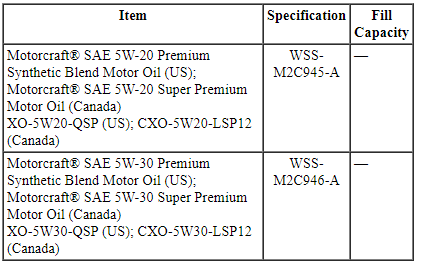
Material
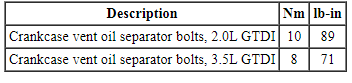
Torque Specifications
DESCRIPTION AND OPERATION
Engine Emission Control
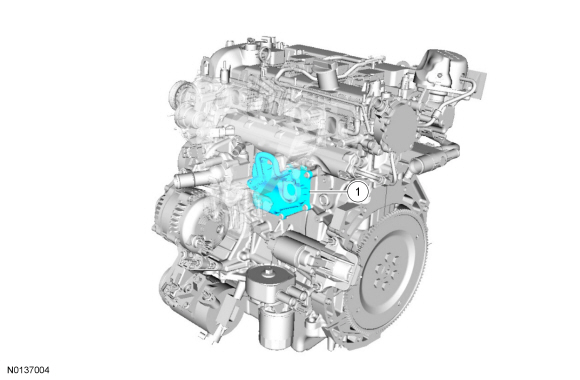
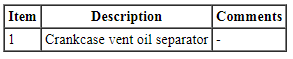
Component Locations
2.0L GTDI
3.5L Ti-VCT and 3.7L Ti-VCT
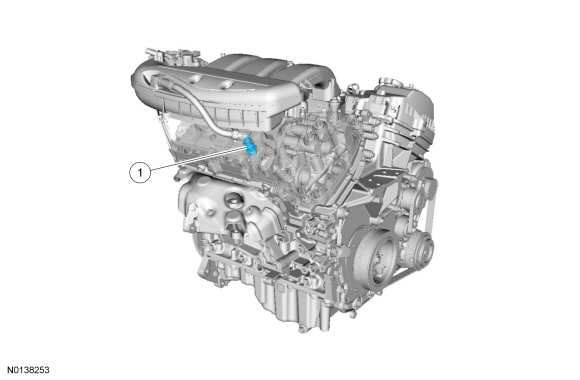
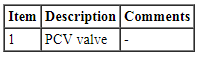
3.5L GTDI
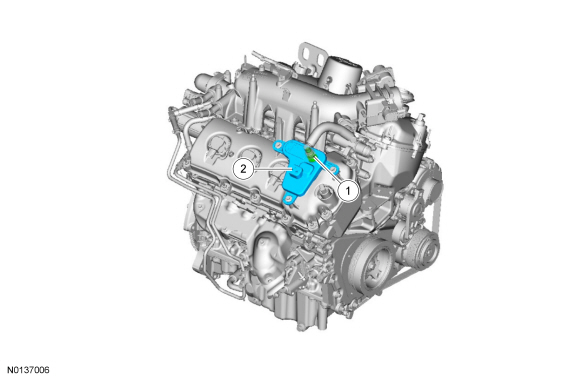
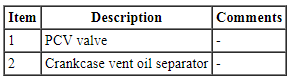
System Operation
Refer to the PC/ED manual section 1 Description and Operation.
Component Description
Refer to the PC/ED manual section 1 Description and Operation.
DIAGNOSIS AND TESTING
Engine Emission Control
For PCM DTCs, refer to Section 303-14 DTC Chart: PCM. For driveability symptoms without DTCs, refer to the PC/ED manual, section 3 Symptom Charts.
REMOVAL AND INSTALLATION
Crankcase Vent Oil Separator - 2.0L GTDI
Removal and Installation
NOTE: Removal steps in this procedure may contain installation details.
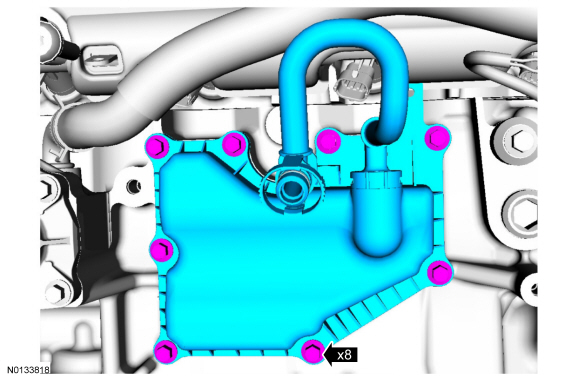
- Remove the intake manifold. For additional information, refer to Section 303-01C.
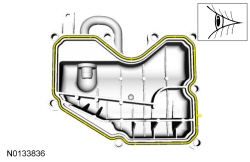
- NOTE: Clean and inspect the gasket mating surfaces.
- Tighten to 10 Nm (89 lb-in).
- Inspect and replace the crankcase vent oil separator gasket as necessary. Visual check.
- To install, reverse the removal procedure.
Crankcase Vent Oil Separator - 3.5L GTDI
Removal and Installation
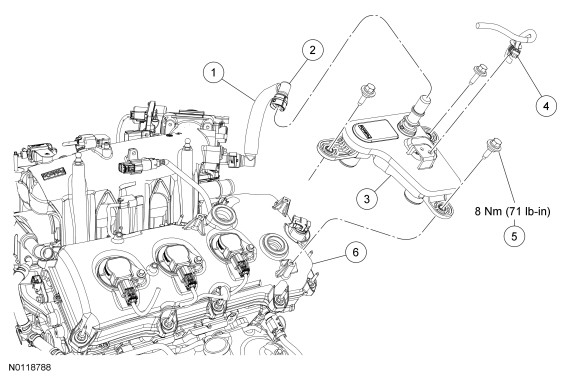
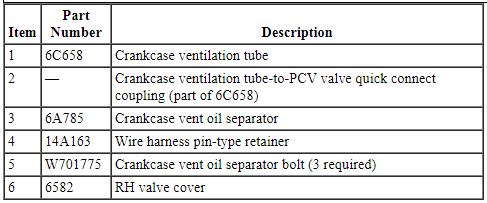
- Release the wire harness pin-type retainer from the crankcase vent oil separator.
- Disconnect the crankcase ventilation tube-to-PCV valve quick connect coupling. For additional information, refer to Section 310-00.
- Remove the 3 crankcase vent oil separator bolts.
- To install, tighten to 8 Nm (71 lb-in).
- Remove the crankcase vent oil separator from the RH valve cover.
- To install, reverse the removal procedure.
Positive Crankcase Ventilation (PCV) Valve - 3.5L Ti-VCT
Material
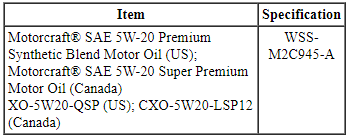
Removal and Installation
NOTE: Removal steps in this procedure may contain installation details.
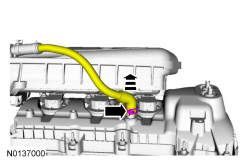
- NOTICE: A new PCV valve
must be installed if removed from the valve cover. Damage will occur to the
locking mechanism on the PCV valve.
Minor component movement CCW. Discard the specified component. Follow local disposal regulations.
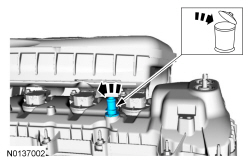
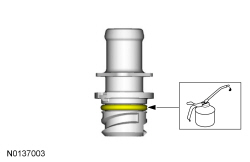
- To install, reverse the removal procedure. Apply the specified lubricant to the specified component.
Positive Crankcase Ventilation (PCV) Valve - 3.5L GTDI
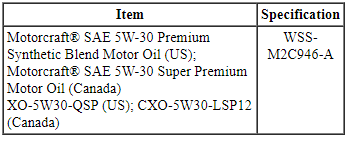
Material
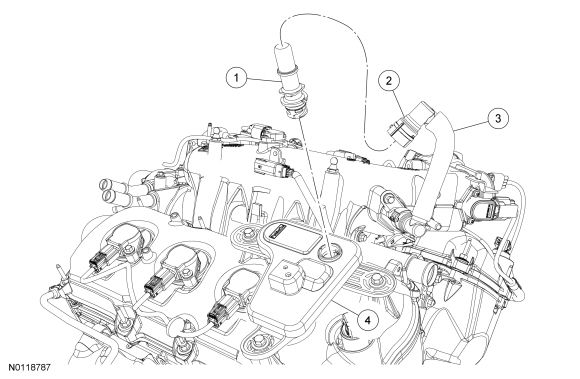
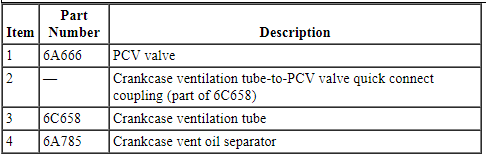
Removal and Installation
- Disconnect the crankcase ventilation tube-to-PCV valve quick connect coupling. For additional information, refer to Section 310-00.
- NOTICE: A new PCV valve must be installed if removed from the
valve cover. Damage will occur to the locking mechanism on the PCV valve.
NOTE: To install, apply clean engine oil to the O-ring seal.
Rotate the PCV valve counterclockwise and remove from the crankcase vent oil separator.- Discard the PCV valve.
- To install, reverse the removal procedure.
- Install a new PCV valve.
Positive Crankcase Ventilation (PCV) Valve - 3.7L Ti-VCT
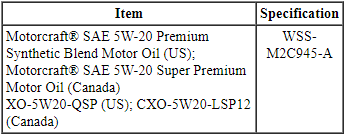
Material
Removal and Installation
NOTE: Removal steps in this procedure may contain installation details.
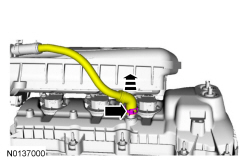
- NOTICE: A new PCV valve
must be installed if removed from the valve cover. Damage will occur to the
locking mechanism on the PCV valve.
Minor component movement CCW. Discard the specified component. Follow local disposal regulations.
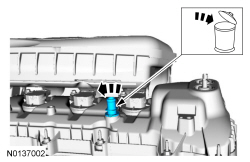
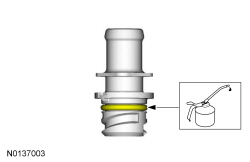
- To install, reverse the removal procedure. Apply the specified lubricant to the specified component.
 Engine Ignition - 3.7L Ti-VCT
SPECIFICATIONS
Material
General Specifications
Torque Specifications
DESCRIPTION AND OPERATION
Engine Ignition
Component Location
3.7L Ti-VCT
System Operation
REFER to the PC/ED m ...
 Intake Air Distribution and Filtering
SPECIFICATIONS
Material
Torque Specifications
DESCRIPTION AND OPERATION
Intake Air Distribution and Filtering
2.0L GTDI
The air intake system consists of the:
ACL assembly.
ACL&nbs ...
Other materials:
Removal and Installation
Antenna - Satellite Radio
Removal and Installation
NOTE: This procedure applies to both the stand-alone satellite radio
antenna and the combination satellite radio/Global Positioning System (GPS)
antenna.
Lower the headliner. For additional information, refer to Section
501-05.
...
Technical specifications
Wheel Lug Nut Torque Specifications
WARNING: When a wheel is installed, always remove any
corrosion, dirt or foreign materials present on the mounting
surfaces of the wheel or the surface of the wheel hub, brake drum or
brake disc that contacts the wheel. Make sure that any fasteners that
attac ...
General Procedures
Camshaft Bearing Journal Diameter
NOTE: Refer to the appropriate Section 303-01 for the specification.
Measure each camshaft journal diameter in 2 directions.
Camshaft Journal to Bearing Clearance - OHC Engines
NOTE: Refer to the appropriate Section 303-01 for the specification.
...
