
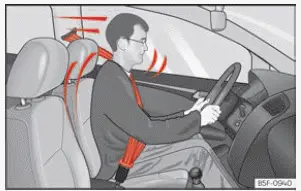
Fig. 16 Drivers with properly worn seat belts
will not be thrown forward in the event of
sudden braking.
Correctly fastened seat belts are among the most important safety features in the Seat Ateca. They help keep the driver and passengers in their intended seating positions, particularly during emergency braking, sudden changes in direction or a collision. By restraining the body, seat belts limit uncontrolled forward and sideways movement that could otherwise cause serious injuries. They also significantly reduce the possibility of occupants being thrown out of the vehicle during an accident.
Occupants who wear their seat belts correctly benefit from the belts' ability to absorb and manage some of the kinetic energy generated during a collision. The front structure of the vehicle and other passive safety components, including the airbag system, are also designed to absorb energy and reduce the forces acting on occupants. These protective features work together to limit the effects of a collision and reduce the likelihood of serious injury. However, their effectiveness depends heavily on the occupants being properly restrained. For this reason, everyone must fasten their seat belt before every journey, regardless of the distance involved. Even a short drive around the corner can involve unexpected braking or an accident.
Make sure that all passengers have fastened their seat belts correctly before setting off. Accident statistics consistently demonstrate that wearing a seat belt substantially reduces the risk of injury and improves the chances of surviving a serious collision. Properly worn seat belts also help occupants remain in the positions for which the airbags are designed, allowing these supplementary restraint systems to provide more effective protection when they deploy. Because of their proven safety benefits, the use of seat belts is a legal requirement in most countries. Every occupant of the Seat Ateca should therefore remain properly restrained throughout the journey.
Although the Seat Ateca is equipped with airbags, these systems do not replace seat belts. Airbags are supplementary protective devices that deploy only when specific accident conditions are met. For example, the front airbags are designed to activate in certain frontal collisions, but they do not deploy in every accident. They will not normally activate during minor frontal impacts, side impacts, rear-end collisions, vehicle rollovers or accidents in which the forces detected by the airbag control unit do not reach the required deployment threshold. A correctly fastened seat belt remains essential in all these situations, including accidents in which no airbag is triggered.
Important safety instructions for the use of seat belts
- Always fasten and wear your seat belt in accordance with the instructions provided in this section. Make sure the belt follows the correct path across your body and remains properly positioned throughout the journey.
- Ensure that every seat belt can be fastened securely and that the belt webbing, buckle and associated components are free from damage. Seat belts must remain fully functional and readily available for use whenever the corresponding seating position is occupied.
WARNING
- Failure to wear a seat belt, or wearing it incorrectly, greatly increases the risk of serious or fatal injuries during an accident. An improperly positioned belt may fail to restrain the occupant effectively and can allow excessive body movement during a collision.
Seat belts provide their intended level of protection only when they are fastened securely, adjusted correctly and worn in the appropriate position. Always check that the belt lies properly against your body before the vehicle starts moving.
- Never allow two occupants to use the same seat belt, even if one or both occupants are children. Each person must occupy an approved seating position and use an individual restraint system. A shared seat belt cannot protect two people correctly and may cause severe injuries in a collision.
- Never release your seat belt while the vehicle is moving. Even a brief period without a properly fastened restraint can expose you to life-threatening injuries if the driver brakes suddenly or an accident occurs.
- Never position the seat belt over hard, sharp or fragile objects carried in your clothing, such as spectacles, pens or similar items. During a collision, the belt may press these objects forcefully against the body, potentially causing serious injuries.
- Prevent seat belts from becoming damaged, trapped or jammed between vehicle components. The belt webbing must not rub against sharp edges or become caught in doors, seat mechanisms or other parts that could weaken or damage the material.
- Never route the shoulder section of the seat belt beneath your arm, behind your back or across your body in any other incorrect position. Such arrangements prevent the belt from distributing restraint forces as intended and can considerably increase the risk of injury.
- Avoid wearing bulky or loose clothing that prevents the seat belt from fitting closely against your body. For example, a heavy overcoat worn over several layers of clothing can create excessive space between the belt and the occupant, reducing restraint effectiveness during sudden braking or a collision.
- Keep the opening of the seat belt buckle free from paper, dirt and other foreign objects. Anything lodged inside the buckle can prevent the latch plate from engaging completely, even if it appears to have been inserted.
- Never use seat belt clips, adjustment rings or similar accessories to change the position or tension of the belt webbing. Unapproved devices may interfere with the restraint system's intended operation and reduce its protective effectiveness.
- Frayed, torn or otherwise damaged seat belt webbing can fail to provide adequate protection in an accident. Damage to belt anchorages, retractors, buckles or connecting components can be equally dangerous. Inspect all seat belts regularly for visible wear, damage or operating problems, and have any defects addressed by a qualified specialist.
- Seat belts that have been subjected to significant loads during an accident and have stretched must be replaced by a specialised workshop. Replacement may also be necessary when no damage is visible, because the restraint components may have been weakened internally. The corresponding belt anchorages must also be inspected to ensure that they remain secure and suitable for continued use.
- Never attempt to repair a damaged seat belt yourself. Do not remove, alter or modify any part of the seat belt assembly, including the webbing, buckle, retractor or anchorage. Repairs and replacements must be carried out by a specialised workshop using suitable components and procedures.
- Keep the seat belt webbing clean and free from substances that could interfere with its movement. Excessive dirt or contamination may affect the operation of the belt retractor, preventing the webbing from extending or retracting correctly when required.
 Seat belts
...
 Seat belt buckled indication
Lights up red
A red seat belt warning indicator informs the driver that the driver's or front passenger's seat belt has not been fastened. This warning is intended to remind the relevant occupant to ...
Other materials:
Ford Extended Service Plan
PROTECT YOURSELF FROM THE RISING COST OF VEHICLE REPAIRS
WITH A FORD EXTENDED SERVICE PLAN.
SERVICE PLANS (U.S. only)
More than 32 Million Ford and Lincoln owners have discovered the
powerful protection Ford ESP. It is the only extended service plan
backed by Ford Motor Company, and provides pe ...
Transaxle/Transmission Cooling - 6F35
SPECIFICATIONS
Material
Torque Specifications
DESCRIPTION AND OPERATION
Transaxle Cooling
The transmission fluid cooling system consists of the following:
OTA transmission fluid cooler
Front transmission fluid cooler tube assembly
Rear transmission fluid cooler tube assembly
Transmission ...
Autolamps
WARNING: In severe weather conditions, it may be necessary to
switch your headlamps on manually.
Note: If the vehicle is equipped with autolamps, it will have the
windshield wiper rainlamp feature. When the windshield wipers are
turned to low- or high-speed wiping during daylight, and the headla ...
