
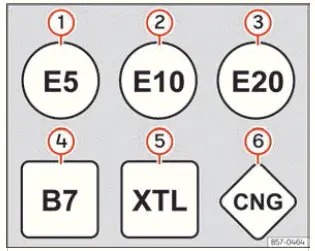
Fig. 187 Identification of fuels according to
European Union (EU) Directive 2014/94/
Different types of fuel are identified by standardised symbols displayed on filling station pumps and, depending on the country and vehicle specification, on the inside of the Seat Ateca fuel tank flap. These markings help drivers distinguish between available fuels and select the type suitable for their engine. Before refuelling, compare the identification symbol on the pump with the information provided on the vehicle. The symbols indicate the fuel category and, where applicable, the maximum proportion of ethanol or biodiesel contained in the fuel.
- Petrol containing up to 5% ethanol: This identification indicates petrol with a maximum ethanol content of 5% by volume. The fuel is commonly identified by the designation E5. The number refers to the permitted ethanol proportion rather than the petrol's octane rating.
- Petrol containing up to 10% ethanol: This marking identifies petrol that may contain as much as 10% ethanol by volume. It is designated E10 and must only be used when the vehicle's engine is approved for this fuel composition.
- Petrol containing up to 20% ethanol: This symbol represents petrol with a maximum ethanol content of 20% by volume, identified as E20. Compatibility with this fuel must be established from the vehicle's specifications before it is used.
- Diesel complying with EN 590: The identification number indicates the maximum proportion of biodiesel permitted in the diesel fuel. For example, B7 designates diesel containing no more than 7% biodiesel. The fuel must comply with the EN 590 standard and the requirements specified for the vehicle.
- Synthetic diesel complying with EN 15940: This designation identifies paraffinic diesel fuel produced in accordance with the EN 15940 standard. Its suitability depends on the approval and fuel requirements of the particular engine.
- Natural gas: The abbreviation CNG stands for Compressed Natural Gas. This marking identifies compressed natural gas as a vehicle fuel and distinguishes it from petrol and diesel products.
Type of petrol
The correct petrol grade for your Seat Ateca is specified on a label located inside the fuel tank flap. This information identifies the fuel requirements applicable to the engine installed in the vehicle. Always check the label before refuelling, particularly when driving a vehicle with an unfamiliar engine or when visiting a filling station that uses different fuel designations.
Petrol-powered versions of the Seat Ateca are equipped with a catalytic converter as part of the exhaust gas treatment system. These vehicles must be operated exclusively with unleaded petrol. Leaded fuel can damage the catalytic converter and reduce its ability to treat exhaust gases effectively. The use of unleaded petrol is therefore an essential requirement for maintaining the correct operation of the engine and emissions control equipment.
The petrol used must comply with the EN 228 standard and should be sulphur-free. The fuel must also satisfy the applicable regulations in the country where the vehicle is being driven. Petrol grades are distinguished by their resistance to engine knocking, expressed either as a Research Octane Number (RON) or an Anti-Knock Index (AKI). These two rating systems use different methods of measurement, so the corresponding numerical values are not identical. Always select a petrol grade that meets the minimum octane requirement specified for your Seat Ateca engine.
Super unleaded petrol 95 octane petrol or normal 91 octane petrol at least
For engines with this fuel specification, SEAT recommends using super unleaded petrol with an octane rating of 95 RON (91 AKI). This is the preferred grade for normal operation and provides the knock resistance intended for the engine. If 95 RON petrol is unavailable, regular unleaded petrol rated at 91 RON (87 AKI) may also be used. However, the lower octane rating can result in a slight reduction in engine performance, particularly when greater power is required.
Super unleaded petrol, 95 octanes at least
Engines with this specification should normally be refuelled with super unleaded petrol rated at a minimum of 95 RON (91 AKI). This octane rating is the required grade for regular operation and should be used whenever it is available. Selecting the specified fuel helps the engine operate under the conditions for which it was designed.
If 95 RON super unleaded petrol cannot be obtained, regular 91 RON (87 AKI) petrol may be used temporarily when necessary. While driving with this lower-octane fuel, keep engine speeds moderate and use the accelerator gently. Avoid demanding operating conditions that place a high load on the engine. Refill the tank with the specified super unleaded petrol as soon as it becomes available rather than continuing to use the lower grade unnecessarily.
Unleaded super plus 98 octane petrol or super 95 octane petrol at least
For Seat Ateca engines with this fuel recommendation, SEAT advises using super plus unleaded petrol rated at 98 RON (93 AKI). This is the preferred grade for achieving the engine's intended performance characteristics. If 98 RON petrol is not available, super unleaded petrol with an octane rating of 95 RON (91 AKI) may be used instead. A slight reduction in engine power may occur when operating with the lower recommended grade.
If neither 98 RON nor 95 RON super unleaded petrol is available, regular petrol rated at 91 RON (87 AKI) may be used temporarily when necessary. In this situation, avoid high engine speeds, rapid acceleration and heavy engine loads. Drive with moderate throttle input and operate the vehicle gently until the correct fuel can be obtained. Refuel with super unleaded petrol as soon as possible to return to the recommended fuel specification.
NOTICE
- Do not use petrol containing a high proportion of ethanol, such as E30 through E100, in Seat Ateca engines that are not specifically approved for these fuels. High-ethanol blends have different fuel characteristics and may be incompatible with components of the fuel system. Using them in an unsuitable engine can cause damage to fuel system components and interfere with normal engine operation. The separate instructions for Totalflex engines apply only to vehicles equipped with that engine type.
- Even a single refuelling with leaded petrol or fuel containing unsuitable metallic additives can permanently reduce the effectiveness of the catalytic converter. These substances may contaminate the exhaust gas treatment components and impair their operation. Always use the specified unleaded fuel and avoid products containing metallic compounds that are not approved for the vehicle.
- Only use petrol additives that have been approved by SEAT S.A. Certain commercially available products intended to increase the octane rating or reduce engine knocking may contain metallic substances. These additives can damage the engine and catalytic converter, even when they are marketed as performance-enhancing or fuel-treatment products. Do not use additives of this type unless they have been expressly approved for the vehicle.
- Do not refuel with petrol identified at the pump as containing metallic additives. This includes lead replacement petrol, commonly designated LRP, which may contain high concentrations of metal-based compounds. Such fuels are unsuitable for the Seat Ateca and can damage the engine and exhaust gas treatment system. Check the fuel designation carefully before filling the tank.
- Operating the engine at high speeds or with the accelerator fully depressed while using petrol with an octane rating below the specified grade can cause engine damage. Lower-octane fuel provides less resistance to knocking, particularly under heavy engine load. If a lower grade has been used temporarily in accordance with the instructions above, drive gently and avoid demanding engine operation until the recommended petrol is available.
Note
- Petrol with an octane rating higher than the minimum required by the engine may be used. For example, an engine approved for 95 RON petrol can also be refuelled with a suitable higher-octane unleaded grade. However, using petrol with a higher rating does not necessarily produce an improvement in performance or fuel consumption. The fuel must still comply with the applicable specifications and contain no unsuitable additives.
- In countries where sulphur-free petrol is not available, fuel with a low sulphur content may also be used. Choose fuel that meets the applicable local requirements and is as close as possible to the recommended specification. Sulphur-free petrol remains the preferred option where it is available.
 Fuel types
...
 Ethanol fuel
✓ Valid for: vehicles with Totalflex engines
Seat Ateca vehicles equipped with a Totalflex engine can be identified by the label on the inside of the fuel tank flap. This label carries the design ...
Other materials:
Troubleshooting
Steering fault
The steering warning lamp illuminates red on the instrument cluster. A red indication identifies a serious steering system malfunction that requires immediate attention and must not be treated as a routine notification.
A fault has been detected in the electromechanical powe ...
Battery, Mounting and Cables
SPECIFICATIONS
General Specifications
Torque Specifications
DESCRIPTION AND OPERATION
Battery and Cables
Overview
The battery and cable system consists of the following components:
Battery
Battery cable assembly (both negative and positive cable serviced as an
assembly)
High current&nb ...
Crash sensors and airbag indicator
WARNING: Modifying or adding equipment to the front end of
your vehicle (including frame, bumper, front end body structure
and tow hooks) may affect the performance of the airbag system,
increasing the risk of injury. Do not modify the front end of your
vehicle.
Your vehicle has a collection of ...
