
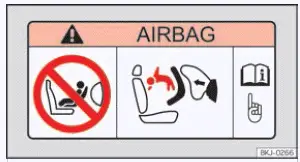
Fig. 34 Airbag sticker: on the passenger side
sunshade blind.
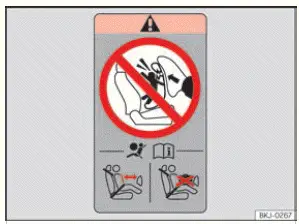
Fig. 35 Airbag sticker: on the rear frame of the
passenger side door.
Warnings about fitting a child seat
Before installing a child restraint system in the Seat Ateca, carefully review the following general safety precautions. These instructions apply to all types of child seats, regardless of whether they are secured using the vehicle's seat belts, ISOFIX anchorages or another approved attachment arrangement. Correct installation is essential because even a suitable, officially approved child seat may not provide its intended protection if it is positioned or fastened incorrectly.
- Always read the child seat manufacturer's operating and installation instructions before fitting the restraint. Follow the specified procedures for securing the seat, adjusting its position and fastening the child. Pay particular attention to any restrictions concerning the vehicle seating position, attachment points or required additional support components.
- Whenever possible, install the child seat on the rear seat behind the front passenger. This position is recommended because it can allow the child to enter and leave the vehicle from the pavement side, reducing exposure to passing traffic. Before opening the door or helping the child out, always check that the surrounding area is safe.
- Adjust the height of the vehicle's seat belt so that the belt follows its intended route through the child restraint without twisting, excessive tension or an unnatural change in direction. The belt must lie correctly against the designated guides and must not interfere with the child seat's installation.
When installing a rear-facing child seat that uses the vehicle's seat belt, set the seat belt height adjuster to its lowest position. This helps establish the required belt routing for the installation described in the vehicle instructions. Always check that the belt remains correctly positioned and that the child restraint is securely fastened.
- When fitting a rear-facing child seat in the back of the Seat Ateca, adjust the front seat backrest so that it does not touch the child restraint. Sufficient clearance must be maintained between the front backrest and the rear-facing child seat. If a forward-facing child restraint is installed, position the front seat backrest so that it does not come into contact with the child's feet. Check these clearances after making any adjustments to the front seat.
- For correct installation of a child restraint on a rear seat, adjust or remove the corresponding head restraint if necessary to prevent it from pressing against the child seat. The child restraint must be able to rest in its intended position without being pushed forwards or held at an unsuitable angle by the vehicle's head restraint. Follow the child seat manufacturer's instructions when determining the required arrangement.
- Do not install a semi-universal child seat secured by the vehicle's seat belt and an additional support leg in the centre rear seating position. The available distance between the seat and the vehicle floor is smaller in this position than at the other seating locations. Consequently, the support leg cannot provide the stability required for this type of installation. Use only a seating position approved for the particular restraint and its support arrangement.
Important information about the front passenger airbag
The Seat Ateca is equipped with warning information concerning the front passenger airbag and the installation of child restraint systems. The relevant safety sticker is located on the front passenger sun visor and/or on the passenger-side door frame, as illustrated in Fig. 34 and Fig. 35. These labels draw attention to the serious danger associated with placing a rear-facing child seat in front of an active passenger airbag. Always read the warnings before installing a child restraint in the front passenger seat.
In addition to the information displayed on the vehicle's warning labels, carefully read and follow the safety instructions provided in the relevant sections of the owner's manual. These instructions explain the precautions necessary when using the front passenger seat and the surrounding airbag deployment area.
- Maintain the required safety distance from the front passenger airbag. The passenger seat and its occupant must be positioned correctly so that the airbag has sufficient space to deploy and provide its intended protection. The correct seating position is particularly important when deciding whether a child restraint can be used in this location.
- Keep the space between the front passenger and the passenger-side airbag completely free from objects and obstructions, as described in the section Front airbags on page 51. Items placed within the deployment area may interfere with inflation or be propelled towards occupants when the airbag activates.
An enabled front passenger airbag presents an extremely serious danger to a child travelling in a rear-facing restraint installed on the front passenger seat. If the airbag deploys during a collision, it can strike the back of the child seat with tremendous force, potentially causing severe or fatal injuries. The risk exists even when the child restraint itself is correctly installed. For this reason, children up to 12 years of age should always travel in the rear seats, where suitable child restraint systems can be used without placing them directly in front of the passenger airbag.
SEAT therefore strongly recommends transporting children in the rear seats of the Seat Ateca, as these are the preferred locations for child restraints. If circumstances make it necessary to install a rear-facing child seat on the front passenger seat, the front passenger airbag must first be deactivated using the designated key-operated switch. The deactivated status must then be verified using the corresponding indicator lamp. Regardless of the seating position, always select a child restraint appropriate for the child's age, height and weight, and install it according to the manufacturer's instructions.
DANGER
- Installing a child restraint on the front passenger seat increases the risk of serious or fatal injuries to the child in the event of an accident, particularly if the front passenger airbag remains active. The front seating position requires special precautions because the child restraint may be located close to the airbag deployment area. Whenever possible, use a suitable rear seating position instead.
- If the front passenger airbag deploys while a child restraint is positioned in its path, the rapidly inflating airbag can strike the seat with tremendous force. The impact may throw the child restraint towards the door, roof or seat backrest, exposing the child to life-threatening injuries. A correctly fastened child seat cannot eliminate this danger when it is installed in front of an active airbag.
- Never install a rear-facing child restraint on the front passenger seat while the front passenger airbag is activated. Deployment of the airbag can cause potentially fatal injuries to the child. If a rear-facing child seat must be used in this position, deactivate the front passenger airbag before installing the restraint and verify that the deactivation indicator confirms the required status. Do not use the front passenger seat for this purpose if the airbag cannot be reliably deactivated.
- If the vehicle is not equipped with a key-operated switch for deactivating the front passenger airbag, contact a qualified technical service facility for the appropriate procedure. Never attempt to disconnect or modify the airbag system yourself. When the child restraint is no longer being used in the front passenger seat and an adult is to occupy that position, ensure that the front passenger airbag is reactivated so that its protective function is available again.
- Never allow a child to travel in the Seat Ateca without being properly secured in a suitable child restraint or, where appropriate, with a correctly fastened seat belt. Children must not stand, kneel or move around on the seats while the vehicle is travelling. Even during a relatively sudden braking manoeuvre, an unrestrained child can be thrown forwards or sideways with considerable force.
In a collision, an unsecured child may be thrown across the passenger compartment and strike the vehicle interior or other occupants. This can cause severe or fatal injuries to the child and may also endanger everyone else in the vehicle. Always check that the child remains correctly restrained before setting off and throughout the journey.
- Never leave a child unattended in a child restraint system or anywhere inside the vehicle. An adult must remain responsible for the child's safety, even when the child seat is correctly installed and the vehicle is stationary. Do not assume that a fastened child restraint makes it safe to leave a child alone in the passenger compartment.
- Children shorter than 1.50 m must not use the vehicle's adult seat belts without an appropriate child restraint system. If the belt does not fit the child's body correctly, it may pass across the abdomen or neck rather than following the intended route over the pelvis and shoulder. During sudden braking or a collision, this incorrect belt position can cause serious abdominal or neck injuries. Use a suitable child seat or booster restraint until the child can be properly secured by the vehicle's seat belt.
- When a child restraint is installed on a rear seat, activate the child safety lock on the corresponding rear door. This helps prevent the child from opening the door from inside the vehicle while travelling. Always verify that the child lock is engaged and that the child is correctly secured before beginning the journey.
 Classification of child seats
Fig. 33 Examples of child seats.
Only use child restraint systems that have received official approval and are appropriate for the child who will use them. The selected seat must correspond to t ...
 Attachment systems
Different attachment systems are used to install child restraint seats securely, depending on the country and the applicable approval requirements. The Seat Ateca supports approved child seat installa ...
Other materials:
Introduction
The Lane Assist system is designed to help the driver keep the Seat Ateca within its current traffic lane, provided that the necessary operating conditions are met. By offering corrective steering assistance when the vehicle approaches a detected lane boundary, the system can help reduce the risk of ...
Remote Convenience
DESCRIPTION AND OPERATION
Universal Transmitter
Overview
The universal transmitter operates garage doors, gates and home or office
lighting and security systems.
System Operation
Universal Home Transmitter
The universal transmitter learns a hand-held transmitter radio frequency code
and stores the ...
Vehicle storage
If you plan on storing your vehicle for an extended period of time
(30 days or more), read the following maintenance recommendations to
make sure your vehicle stays in good operating condition.
All motor vehicles and their components were engineered and tested for
reliable, regular driving. Lo ...
