
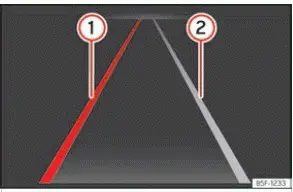
Fig. 124 On the instrument cluster display:
indications of the lane assist system.
- Yellow line: Lane Assist is actively intervening in the steering on the side represented by the highlighted lane marking. This indication shows which detected lane boundary has prompted the corrective steering action. The driver should remain attentive to the vehicle's position and be prepared to override the intervention if necessary.
- White line: The corresponding lane boundary has been detected, and Lane Assist is ready to provide corrective steering assistance on that side if the vehicle approaches the marking unintentionally. The white indication therefore represents a recognised lane boundary for which active intervention is available.
When the displayed lane line is grey, the system has recognised the boundary but is currently in a passive state or is otherwise unavailable for corrective steering intervention on that side. The driver must not assume that the vehicle will receive automatic steering assistance simply because the lane marking is visible in the instrument cluster.
Control lamps
 Lights up grey
The lane departure warning and steering assistance function is in a passive state and is not currently available to provide lane guidance. This may occur when the required operating conditions are not satisfied, even though the system remains switched on. The driver must maintain the vehicle's lane position without relying on corrective steering assistance.
 Lights up green
Lane Assist is active and available to provide corrective steering assistance when the vehicle approaches a recognised lane boundary under suitable conditions. The green indicator confirms that the system is ready to intervene, but it does not mean that the Seat Ateca is steering itself or that the driver can release the steering wheel.
 Lights up yellow
Lane Assist is currently intervening by applying a corrective steering movement. This indication appears when the system attempts to help prevent an unintended departure from the detected traffic lane. The driver can counteract the steering correction whenever necessary and remains responsible for controlling the vehicle's direction.
Switching the lane assist system on or off
In certain countries, Lane Assist is activated automatically whenever the ignition is switched on. This means that the function may be available at the beginning of each journey without requiring the driver to enable it manually. Its actual ability to provide corrective steering assistance still depends on the vehicle's speed, the visibility of lane markings and the other operating conditions described in this chapter.
The current activation status of Lane Assist can be checked in the Driver assistance menu of the infotainment system. Depending on the Seat Ateca's equipment, the function can also be accessed through the driver assistance systems menu opened using the corresponding control button. These menus allow the driver to activate or deactivate Lane Assist and verify whether the function is switched on. The displayed setting should not be confused with the system's active or passive operating state, which can change automatically while driving.
Lane Assist is designed to provide active corrective steering assistance at speeds of approximately 65 km/h (40 mph) and above, provided that the camera has detected the relevant lane boundaries. When these conditions are met, the system can enter its active operating state and intervene if the vehicle approaches a recognised lane marking. At lower speeds or when the necessary lane information is unavailable, Lane Assist may remain passive even though the function itself is enabled.
When the driver activates a turn signal, Lane Assist temporarily enters a passive state on the side corresponding to the indicated direction. This allows the driver to change lanes intentionally without the system attempting to correct the movement across the lane marking. During this time, Lane Assist remains available to provide assistance on the opposite side, provided that the required operating conditions continue to be satisfied. The driver must still check that the intended lane change is safe.
If the driver makes a strong steering movement or firmly counteracts a correction initiated by Lane Assist, the system temporarily switches to a passive state. This behaviour allows direct driver steering input to take priority over automatic corrective assistance. The driver must continue controlling the vehicle and should not expect the system to maintain active steering intervention immediately after such an override.
 When Lane Assist is switched off, a yellow deactivation warning lamp may illuminate in the instrument cluster. Whether this indication is displayed depends on the country and the vehicle's configuration. The warning informs the driver that the lane assistance function has been deactivated and will not provide its normal corrective steering intervention while switched off.
Note If a malfunction affecting Lane Assist persists, the system may deactivate automatically. This prevents the function from continuing to provide steering assistance when its correct operation cannot be assured. If the system repeatedly switches off or does not operate as described, have it checked by a qualified specialist workshop.
Driver intervention prompt
If the driver does not provide the required manual steering correction, Lane Assist may request intervention through a message in the instrument cluster accompanied by audible warning signals. These warnings indicate that the system requires the driver to take a more active role in steering the Seat Ateca. The driver should respond promptly, maintain control of the steering wheel and ensure that the vehicle remains correctly positioned within its lane.
If the driver does not respond to the intervention request, Lane Assist switches to a passive state. Once this occurs, the system no longer provides the same active corrective steering assistance. The driver must therefore take full responsibility for steering and maintaining the vehicle's lane position rather than waiting for further automatic corrections.
Regardless of the steering movements being made, Lane Assist can also display an intervention request and emit audible warnings when corrective steering assistance continues for longer than the system considers reasonable. In this situation, the driver is prompted to steer the vehicle towards the centre of the lane. The warning is intended to encourage active driver control rather than prolonged reliance on the system's corrective steering movements.
Steering wheel vibration
Under certain operating conditions, Lane Assist can generate a vibration through the steering wheel to draw the driver's attention to a lane-related situation. This tactile indication provides an additional form of warning without requiring the driver to look away from the road. The following circumstance may cause the steering wheel to vibrate:
- If the system suddenly intervenes in the steering and then loses recognition of the lane boundary, the steering wheel may vibrate. This can occur when the camera can no longer identify the marking reliably during the corrective manoeuvre. The driver must immediately assess the vehicle's position and take over steering as necessary.
Steering wheel vibration can also be selected through the Assistants menu in the infotainment system. When this option is enabled and Lane Assist is switched on, the steering wheel vibrates if the Seat Ateca crosses a detected lane marking under the relevant operating conditions. The vibration serves as a tactile lane departure warning, alerting the driver to the crossing of a recognised boundary. It does not replace the need to observe road markings, maintain the correct lane position or respond appropriately to changing traffic conditions.
 Introduction
The Lane Assist system is designed to help the driver keep the Seat Ateca within its current traffic lane, provided that the necessary operating conditions are met. By offering corrective steering ass ...
 Troubleshooting
The lane departure warning
assistant
is not available
When Lane Assist is unavailable, the corresponding warning lamp illuminates yellow in the Seat Ateca instrument cluster. A message expla ...
Other materials:
Introduction
The Park Assist system is an additional function of ParkPilot that helps the driver identify suitable parking spaces and carry out certain parking and exit manoeuvres. Using information from the vehicle's ultrasonic sensors, the system assists with steering during supported manoeuvres, making it eas ...
Diagnosis and Testing
Exterior Lighting
DTC Charts
Diagnostics in this manual assume a certain skill level and knowledge of
Ford-specific diagnostic practices. Refer to Diagnostic Methods in Section
100-00 for information about these practices.
BCM DTC Chart
SCCM DTC Chart
IPM-A&nb ...
Remote Convenience
DESCRIPTION AND OPERATION
Universal Transmitter
Overview
The universal transmitter operates garage doors, gates and home or office
lighting and security systems.
System Operation
Universal Home Transmitter
The universal transmitter learns a hand-held transmitter radio frequency code
and stores the ...
