
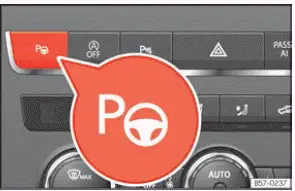
Fig. 138 In the centre console, top section:
button to switch on the Park Assist system.
The Park Assist system in the Seat Ateca uses ultrasonic sensors installed in the front and rear bumpers to identify suitable parking spaces and assist with parking manoeuvres. Its main operating components include these sensors, the  button used to activate or deactivate the system, and the instructions and status messages displayed in the instrument cluster. Together, these components allow the system to assess available parking space and provide steering assistance while the driver remains responsible for controlling the vehicle's movement, speed and braking.
Prerequisites for parking
- The Traction Control System (TCS) must be switched on. Park Assist requires this system to remain active during the parking procedure. If TCS is disabled, the assisted parking function cannot operate under its normal conditions.
- When searching for a parallel parking space, do not exceed approximately 40 km/h (25 mph) while driving alongside the available spaces. Staying within this speed limit allows Park Assist to assess the parking spaces as the Seat Ateca passes them.
- When searching for a perpendicular parking space, also referred to as angle parking, the vehicle's speed must not exceed approximately 20 km/h (12 mph). This lower speed limit applies while passing potential parking bays so that the system can evaluate their suitability.
- Maintain a lateral distance of approximately 0.5 to 2.0 metres between the Seat Ateca and the parking spaces as you drive past them. Keeping within this distance range allows the ultrasonic sensors to monitor the available space under the conditions required by Park Assist.
- For parallel parking, the available space must be at least 0.8 metres longer than the vehicle itself. This additional length provides the clearance required by the system to carry out the assisted manoeuvre. A space that is too short may not be accepted as suitable.
- For perpendicular parking, the parking bay must be at least 0.8 metres wider than the Seat Ateca. This additional width is necessary for the system to perform the parking manoeuvre within its specified operating limits.
- During the assisted parking manoeuvre, do not exceed approximately 7 km/h (4 mph). Keep the vehicle moving slowly and be ready to stop whenever the system requests a change of direction or an obstacle makes further movement unsafe.
Requirements for leaving the parking space (only for parallel parking)
- The Traction Control System (TCS) must remain switched on. Park Assist requires TCS to be active when assisting the driver in leaving a parallel parking space, just as it does during an assisted parking manoeuvre.
- The available parking space must be at least 0.5 metres longer than the vehicle. This minimum additional length is required for Park Assist to calculate and perform the movements needed to guide the Seat Ateca out of a parallel parking position.
- When leaving the parking space with Park Assist, do not exceed approximately 7 km/h (4 mph). Maintain a low, controlled speed throughout the manoeuvre and follow the instructions displayed in the instrument cluster.
Prematurely stopping or automatically interrupting the manoeuvres for parking or exiting a parking space
Park Assist may interrupt an assisted parking or parking-space exit manoeuvre before it has been completed. An interruption can occur when the driver intervenes, when an operating requirement is no longer satisfied or when the system detects a condition that prevents it from continuing. In the following situations, the Seat Ateca stops providing automatic steering assistance for the current manoeuvre:
- The driver presses the
 button. Operating this control interrupts the active parking assistance procedure, allowing the driver to discontinue the manoeuvre.
- The vehicle exceeds approximately 7 km/h (4 mph) more than once during the manoeuvre. Park Assist is designed to operate at very low speeds, and repeatedly exceeding the permitted limit causes the current parking or exit procedure to be cancelled.
- The driver takes control of the steering wheel. Manual steering intervention overrides the automatic steering assistance and interrupts the manoeuvre. The driver must then control the vehicle's direction independently.
- The parking manoeuvre has not been completed within six minutes after automatic steering was activated. If the procedure takes longer than this permitted period, Park Assist ends the current manoeuvre rather than continuing indefinitely.
- A system fault occurs or Park Assist becomes temporarily unavailable. When the system cannot provide the required assistance, the parking manoeuvre is interrupted. The driver should observe any relevant messages in the instrument cluster.
- The Traction Control System (TCS) is switched off. Because active TCS is one of the operating requirements, Park Assist cannot continue the assisted manoeuvre while traction control is disabled.
- The TCS or Electronic Stability Control (ESC) intervenes to regulate vehicle movement. An active intervention by either system causes Park Assist to interrupt the manoeuvre under the specified operating conditions.
- The driver's door is opened. Park Assist requires the driver's door to remain closed during assisted parking and parking-space exit operations. Opening the door causes the active manoeuvre to be interrupted.
To restart an interrupted manoeuvre, first make sure that none of the conditions responsible for cancellation are still present. Check that the driver's door is closed, TCS is enabled, the vehicle is operating within the permitted speed range and no system fault is preventing Park Assist from functioning. Then press the  button again to reactivate the assistance function. Follow the instructions displayed in the instrument cluster before attempting to continue parking or leave the parking space.
Automatic braking intervention to avoid exceeding the speed limit
During an assisted parking or parking-space exit manoeuvre, Park Assist may automatically apply the brakes to help prevent the Seat Ateca from exceeding the permitted speed of approximately 7 km/h (4 mph). This braking intervention is intended to keep the vehicle within the operating speed limit of the assistance system. It does not remove the driver's responsibility for controlling the vehicle's speed with the brake pedal and responding to nearby obstacles.
After the system has applied the brakes automatically, the parking or exit manoeuvre may continue if the required operating conditions remain satisfied. The driver should reduce speed appropriately and continue following the instructions provided by Park Assist. The automatic intervention does not necessarily mean that the parking procedure has been cancelled.
The automatic braking intervention intended to prevent excessive speed is available only once during each attempt to enter or leave a parking space. If the vehicle exceeds approximately 7 km/h (4 mph) again after this intervention, Park Assist terminates the corresponding manoeuvre. The driver must then take full control of the vehicle and, if necessary, restart the assistance procedure under the correct operating conditions.
Special characteristics
The Park Assist system operates within certain technical and physical limitations that affect where and how it can be used. For example, the system cannot perform assisted parking or parking-space exit manoeuvres on sharp bends or very steep inclines. These conditions may prevent Park Assist from calculating or carrying out a suitable manoeuvre within its operating limits. The driver must assess the parking location independently and should not attempt to use the system where the surrounding road layout or gradient makes the manoeuvre unsuitable.
While the Seat Ateca is entering or leaving a parking space, a brief audible signal may instruct the driver to change between forward and reverse gears, depending on the stage of the manoeuvre. These prompts indicate when the system requires a change in the vehicle's direction of travel. During successive forward and backward movements, Park Assist requests the necessary gear change no later than the point at which ParkPilot emits a continuous proximity warning. This continuous warning indicates that an obstacle has been detected at a distance of 30 cm or less. The driver must respond to the instructions promptly, stop the vehicle as required and select the indicated gear before continuing.
When Park Assist turns the steering wheel while the vehicle is stationary, the instrument cluster displays the  symbol. Keep the brake pedal depressed for as long as this symbol remains visible. This allows the system to adjust the steering angle while the Seat Ateca is held at a complete standstill. Allowing the wheels to turn in this position can help Park Assist complete the parking procedure with fewer forward and backward movements. Do not release the brake pedal until the system's instructions indicate that the manoeuvre can continue.
Trailer mode
Park Assist cannot be activated when a trailer is electrically connected to the Seat Ateca through the factory-installed towing bracket. In this configuration, the assisted parking function is unavailable, and the driver must perform parking and manoeuvring operations without Park Assist steering assistance. The restriction applies when the trailer is connected electrically to the vehicle's factory-fitted towing equipment.
After changing a wheel
If Park Assist no longer guides the Seat Ateca correctly into or out of parking spaces after a wheel has been replaced, the circumference of the newly fitted wheel may differ from that of the previous wheel. This difference can affect the information used by the parking assistance system, and an adaptation process may be required before normal operation is restored. The adaptation takes place automatically while the vehicle is being driven. Driving for a few minutes while making gentle turns in both directions at approximately 20 km/h (12 mph) may help the system complete this process. Once the adaptation has taken place, check whether Park Assist performs parking and parking-space exit manoeuvres correctly.
 Introduction
The Park Assist system is an additional function of ParkPilot that helps the driver identify suitable parking spaces and carry out certain parking and exit manoeuvres. Using information from the vehic ...
 Selecting a parking type
Fig. 139 On the instrument cluster display:
display of the assisted parking system with
decreased visibility.
Fig. 140 On the instrument cluster display:
parking modes indica ...
Other materials:
Take special care with...
Headlights/tail lights
Never clean the headlights or tail lights with a dry cloth or sponge. Dust and dirt particles can scratch the surfaces of the light covers when rubbed against them. Moisten the affected area first and use a suitable soft cleaning cloth or sponge to remove contamination gen ...
Pairing your phone for the first time
Note: SYNC can support downloading up to approximately 1000 entries
per Bluetooth-enabled cellular phone.
Note: Make sure the vehicle ignition and radio are turned on and the
transmission is in position P.
Note: To scroll through the menus, press the up and down arrows on
your audio system. ...
Braking system
Information about the brakes
New brake pads require a running-in period before they can deliver their full braking performance. During approximately the first 200 to 300 km, the friction surfaces of the pads and brake discs gradually adapt to one another. Until this process is complete, the braki ...
