
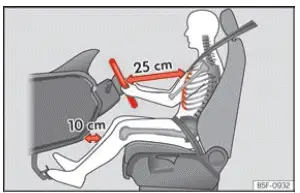
Fig. 14 The correct distance between the
driver and the steering wheel must be at least
25 cm (10 inches).
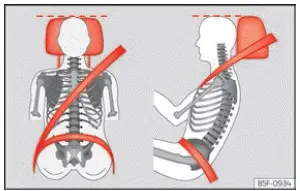
Fig. 15 Correct belt web and headrest
positions
Adopting the correct sitting position is essential for the safety of everyone travelling in the Seat Ateca. The following instructions explain how the driver and passengers should position themselves to ensure that the seat belts, head restraints and airbags can provide their intended protection. Proper seating also helps the driver maintain comfortable access to the vehicle controls and reduces the likelihood of injury during sudden braking, abrupt manoeuvres or a collision.
If a physical condition or disability prevents you from adopting or maintaining the recommended sitting position, consult a specialised workshop about suitable adaptations or additional equipment. Seat belts and airbags are designed to provide their greatest possible protection when occupants are seated correctly, and an unsuitable position can substantially reduce their effectiveness. SEAT recommends having the vehicle assessed by an appropriately qualified service facility to determine whether any special arrangements are necessary.
To improve occupant protection and minimise the risk of injury during an accident, emergency braking or sudden changes in direction, SEAT recommends the seating positions and adjustments described below. These recommendations apply before setting off and should be followed throughout the journey, even when travelling only a short distance.
Valid for all vehicle occupants:
- Adjust the head restraint so that its upper edge is approximately level with the top of your head, or as close to this position as possible. The upper edge should be at least around eye level whenever the available adjustment permits. Keep the back of your head and neck as close to the head restraint as practicable, as illustrated in Fig. 15. Correct positioning helps the restraint provide effective support during certain types of collision.
- Shorter occupants should lower the head restraint completely if necessary, even when the top of their head remains below the upper edge of the restraint. The adjustment should provide the most suitable available position for their height.
- Taller occupants should raise the head restraint to its highest position when required. This helps position the restraint as close as possible to the recommended height for effective head support.
- Keep both feet in the designated footwell whenever the vehicle is moving. Your feet should remain on the floor in front of your seat rather than resting on the seat cushion, dashboard or any other interior surface.
- Adjust the seat belt to fit your body correctly and fasten it securely before the journey begins. Make sure the belt lies properly across the shoulder and pelvis, without twisting or passing over unsuitable parts of the body.
The following also applies to the driver:
- Position the driver's seat backrest almost upright so that your back remains fully supported against it. Avoid reclining excessively, as this can interfere with the correct position of the seat belt and reduce your ability to control the vehicle comfortably.
- Adjust the steering wheel so that the distance between its centre and your sternum is at least 25 cm (10 inches), as shown in Fig. 14. You should be able to hold the outer sides of the steering wheel with both hands while keeping your elbows slightly bent. This position provides sufficient room for the driver's airbag to operate as intended and allows comfortable steering movements.
- Always position the steering wheel so that its centre faces your chest rather than your face. Correct steering wheel alignment is important because the driver's airbag deploys from the steering wheel and is designed to provide protection when the driver is seated at the recommended distance and angle.
- Adjust the seat forwards or backwards until you can fully depress the pedals while keeping your knees slightly bent. There must also be a clearance of at least 10 cm (4 inches) between the knee area and the dashboard, as illustrated in Fig. 15. This adjustment allows full pedal operation without requiring you to stretch your legs or move away from the seat backrest.
- Set the seat height so that you can comfortably reach the upper part of the steering wheel while maintaining a suitable driving position. The adjustment should also allow you to see the road and the vehicle instruments clearly without compromising the recommended distance from the steering wheel.
- Keep both feet in the driver's footwell throughout the journey so that you can operate the pedals whenever necessary. Maintaining the correct foot position is essential for retaining full control of the Seat Ateca during normal driving and unexpected traffic situations.
For the passenger, the following applies:
- Adjust the front passenger seat backrest to an almost upright position, ensuring that your back rests fully against it. Sitting upright helps the seat belt remain correctly positioned and allows the front passenger airbag to provide its intended protection in a collision.
- Move the front passenger seat as far back as reasonably possible while maintaining a comfortable and correct sitting position. A minimum distance of 25 cm (10 inches) must be maintained between the chest and the instrument panel. Sitting closer than this reduces the space available for the passenger airbag to deploy correctly and can significantly increase the risk of injury if the airbag is activated.

 Number of seats
The Seat Ateca has five seating positions: two individual seats in the front and three seating positions in the rear. Each designated seat is equipped with a seat belt intended to protect the occupant ...
Other materials:
Steering Column
SPECIFICATIONS
Torque Specifications
DESCRIPTION AND OPERATION
Steering Column
The steering column system consists of the following components:
Intermediate shaft
Steering column
SCCM (if equipped)
Steering column switches
Steering column tilt motor (if equipped)
Steering wheel
Selecto ...
Introduction
When towing a trailer with the Seat Ateca, always observe the regulations that apply in the country where you are driving. Legal requirements concerning trailer operation, towing equipment, permitted weights and the use of a towing bracket may vary between countries. Before setting off, make sure th ...
Services portfolio
The service portfolio described in this section represents the widest possible selection of SEAT CONNECT functions rather than a guarantee that every service is available on every vehicle. Only certain models and equipment configurations support the complete range of features. The services assigned ...
