
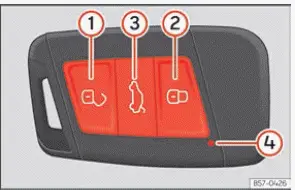
Fig. 43 Vehicle key
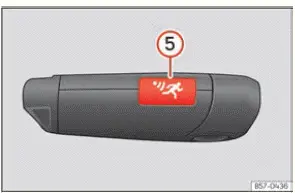
Fig. 44 Vehicle key with alarm button.
- Unlocks the vehicle. Press this button to release the central locking system and allow access to the Seat Ateca. The unlocking function is operated remotely, provided the key is within its effective operating range.
- Locks the vehicle. Press this button to activate the central locking system and secure the vehicle's doors. Before leaving the vehicle, check that the doors have closed properly and that the locking command has been carried out.
- Unlocks only the rear lid. This function allows access to the luggage compartment without unlocking the other vehicle doors.
Press and hold the rear lid release button until all the vehicle's turn signals flash briefly. This flashing confirmation indicates that the remote unlocking command has been received and the rear lid has been released.
After activating this function, you have 2 minutes to open the rear lid. During this period, the luggage compartment can be accessed using the rear lid release mechanism.
If the rear lid is not opened within the 2-minute period, it locks again automatically. The indicator lamp on the vehicle key also flashes during operation, providing visual feedback that the remote control function has been activated.
- Control lamp. This indicator provides visual confirmation when a button on the remote control key is pressed. Its flashing behaviour depends on how long the button is operated and can also help identify when the key battery needs replacing.
- Alarm button. This button must only be used in an emergency. Pressing it activates the vehicle's horn and causes the turn signals to illuminate for a short period, drawing attention to the Seat Ateca. Press the alarm button again to switch off the warning function. Avoid operating this button unnecessarily, as it may disturb people nearby or activate the alarm unintentionally.
The Seat Ateca can be locked and unlocked remotely using the buttons on its vehicle key. This allows the central locking functions to be operated without inserting the key into a door lock, making it convenient to secure the vehicle or gain access when approaching it.
The vehicle key contains a radio transmitter and its own battery. When a button is pressed, the transmitter sends the corresponding command to the vehicle's central locking system. The battery supplies the electrical power required for the remote control functions.
The receiver for these remote control signals is installed inside the vehicle. It receives the commands transmitted by the key and allows the relevant locking or unlocking function to be carried out when the signal is recognised.
With a new battery installed, the remote control key normally operates from a distance of several metres around the vehicle. The actual operating range can vary according to surrounding conditions, interference and the condition of the key battery. A reduced range does not necessarily indicate a fault in the vehicle's locking system.
If the Seat Ateca can no longer be locked or unlocked using the remote control, the key may need to be synchronised again with the vehicle. A weak or discharged key battery can cause similar symptoms and may need replacing. Check these possibilities when the remote control stops responding or works only intermittently.
Several vehicle keys may be used with the same Seat Ateca, provided that each key has been correctly coded and synchronised with the vehicle. This allows authorised users to operate the locking system with their own compatible keys.
Control lamp on the vehicle key
When a button on the vehicle key is pressed briefly, the control lamp marked 4 in Fig. 43 flashes once for a short moment. If the button is held down for a longer period, the lamp flashes repeatedly while the corresponding command is being transmitted. This occurs, for example, when using the comfort opening function, which requires the button to remain pressed rather than being operated with a single brief touch.
If the control lamp does not illuminate when a key button is pressed, the battery may be discharged. Replace the vehicle key battery to restore reliable operation of the remote control. A battery that no longer provides sufficient power can prevent the key from transmitting commands correctly, even if the vehicle's central locking system is otherwise functioning normally.
Spare key
The vehicle identification number, also referred to as the chassis number, is required when ordering a replacement or additional key for the Seat Ateca. This information is used to identify the vehicle and obtain a key suitable for its locking and immobiliser systems.
Every new vehicle key contains an electronic microchip that must be programmed with the appropriate information from the vehicle's electronic immobiliser. The immobiliser recognises correctly coded keys and prevents the use of keys that have not been authorised for the vehicle. A key without the necessary microchip will not function correctly, and the same applies if the microchip has not been programmed to match the immobiliser. This remains true even when the mechanical part of the key has been cut precisely to fit the vehicle's locks.
Replacement keys and additional spare keys can be obtained from an official SEAT service centre, a qualified specialised workshop or an approved automotive key service with the equipment and expertise required to produce this type of key. The service provider must be capable of preparing the key and carrying out the necessary electronic coding for the vehicle.
Before a new or replacement key can be used, it must be synchronised with the Seat Ateca. This procedure allows the vehicle to recognise the key correctly and ensures that its remote control functions operate with the central locking system. A newly supplied key should not be considered ready for use until the required synchronisation has been completed.
WARNING
- Never leave children, people with disabilities or anyone who may require assistance unattended inside the vehicle. In an emergency, they may be unable to unlock the doors, leave the vehicle or respond appropriately without help. A locked vehicle can make it particularly difficult for these occupants to escape or obtain assistance when necessary.
- Unsupervised or unauthorised use of the vehicle key can cause electrical equipment to operate unexpectedly. For example, someone pressing the key buttons may activate the electric windows or other remotely controlled functions, creating a risk of injury. The remote control can also lock the vehicle doors, potentially preventing occupants from leaving easily or making it more difficult for other people to provide assistance during an emergency. Keep the key away from anyone who might operate it without understanding the consequences.
- Never leave the vehicle keys inside the Seat Ateca when you are not present. An unauthorised person could gain access to the vehicle or attempt to use it, potentially causing injury, property damage or theft. Always take the key with you whenever you leave the vehicle, even if you intend to be away for only a short time. Store spare keys securely and prevent unauthorised access to them.
NOTICE Do not place or leave the vehicle key close to the Wireless Charger area. The electromagnetic activity associated with wireless charging may interfere with the key's electronic operation. Keep the remote control key away from this area to reduce the possibility of interference with its functions.
NOTICE All Seat Ateca vehicle keys contain sensitive electronic components. Protect them from mechanical damage, strong impacts and exposure to moisture or excessive humidity. Dropping the key, subjecting it to unnecessary force or allowing water to enter its housing may damage the internal electronics and affect the operation of the remote control or immobiliser functions.
Note
- Press the buttons on the vehicle key only when you actually need to operate the corresponding function. Unnecessary button presses may unlock the Seat Ateca unintentionally or activate its alarm. This can happen even when you are outside the normal operating range of the remote control, so avoid pressing the buttons accidentally while carrying the key in a pocket or bag.
- The operation of the remote control key may be affected by radio signals from nearby devices using the same or overlapping frequency ranges. Equipment such as radio transmitters and mobile telephones can create interference that reduces the reliability of communication between the key and the vehicle. If the remote control does not respond, interference in the surrounding area may be one possible cause.
- Physical obstacles between the remote control key and the vehicle can reduce the effective transmission range. Adverse weather conditions and a weak or discharged key battery may also have a considerable effect on the distance from which the central locking system can be operated. If the remote control range becomes unusually short, check the battery condition and try operating the key closer to the vehicle.
- If the vehicle key buttons or one of the central locking buttons are pressed repeatedly within a short period, the central locking system may temporarily disable its operation to protect against overloading. This protective response prevents continuous rapid activation of the locking mechanism.
After this temporary interruption, the vehicle remains unlocked. If you need to leave the Seat Ateca unattended, check its locking status and lock it again when the central locking system is ready to respond. Do not assume that the vehicle has remained locked after repeated button operations.
- Additional remote control keys can be obtained from a SEAT Technical Service. These keys must be matched to the vehicle's locking system before they can be used. The necessary synchronisation ensures that the replacement remote control is recognised by the Seat Ateca and can operate the corresponding locking functions correctly.

 Pulling out the key blade
Fig. 45 Vehicle key: extracting the emergency
key.
The Seat Ateca vehicle key contains a removable emergency key blade that can be used to lock or unlock the vehicle manually when the remote ...
Other materials:
Windshield washers
Note: Do not operate the wipers on a dry windshield. This may scratch
the glass, damage the wiper blades or cause the wiper motor to burn out.
Always use the windshield washer before wiping a dry windshield.
Note: Do not operate the washer when the washer reservoir is empty.
This may cause ...
Description and operation
The Start-Stop system is designed to reduce unnecessary fuel consumption and carbon dioxide (CO2) emissions by limiting the time the engine spends idling. It is particularly useful in traffic situations involving frequent stops, such as waiting at traffic lights or moving through congested roads. By ...
System limits affecting the drowsiness
monitor
The Seat Ateca drowsiness monitor has limitations that can affect its ability to assess driving behaviour accurately. Certain speeds, road conditions and driving situations may make it difficult for the system to distinguish fatigue-related behaviour from normal steering or vehicle movements. Under ...
