
 The engine does not start
The corresponding indicator lamp illuminates green on the instrument cluster. This indication alerts the driver that the required brake pedal operation has not been carried out and that the requested starting or gear selection procedure cannot be completed under the current conditions.
The brake pedal has not been depressed, for example when the driver attempts to move the automatic transmission selector lever into a driving range. The transmission requires the brake pedal to be pressed before the relevant selector operation can take place, helping prevent the vehicle from moving unexpectedly.
- Depress the brake pedal firmly before selecting the required gear range. Keep the pedal pressed while moving the selector lever and until the intended transmission position has been engaged. This satisfies the brake pedal requirement indicated by the green warning lamp.
 Selector lever lock
The control lamp flashes green, indicating that the selector lever locking mechanism has not engaged as required. The flashing indication draws attention to the selector lock rather than to a normal gear selection status.
The locking button on the selector lever is not correctly engaged. As a result, the transmission cannot complete the expected selection procedure, and the driver must correct the selector lock condition before normal operation can resume.
To prevent unintended movement, the vehicle is prevented from driving forwards while this condition is present. Engage the selector lever lock correctly and make sure the selector is properly positioned before attempting to move away. Do not force the selector lever or apply excessive accelerator pressure while the warning remains active.
The instrument cluster may also display specific messages relating to the clutch or automatic transmission. These messages identify the type of problem detected and indicate whether the vehicle must be stopped immediately, whether restricted driving is possible or whether specialist inspection is required. Follow the instruction associated with the displayed warning.
Clutch
 Clutch overheated Please
stop!
- The DSG clutch has become excessively hot and may be damaged if operation continues. Stop the Seat Ateca in a safe location, move the selector lever into position P and allow the engine to continue running at idle speed while the gearbox cools. Do not attempt to continue driving while the overheating warning remains active. Once the warning lamp and driver message have disappeared, arrange for the cause of the overheating to be checked and corrected by a specialised workshop without delay. If the warning lamp or message remains displayed after waiting for the gearbox to cool, do not continue driving. Seek assistance from a qualified specialist, as further operation could cause additional transmission damage.
Faults in the gearbox
 Gearbox: Fault! Stop the
vehicle and
place the lever in P
- A malfunction has been detected in the automatic gearbox that requires the vehicle to be stopped. Find a safe place to pull over, bring the Seat Ateca to a complete standstill and move the selector lever into position P. Do not continue driving, even if the vehicle still appears capable of moving. The warning indicates that normal transmission operation cannot be relied upon. Contact a qualified specialist for assistance and have the gearbox inspected before the vehicle is used again.
 Gearbox: System fault! You
may continue
driving
- The transmission control system has detected a fault, but the displayed message indicates that driving may continue. Although the vehicle remains usable, the malfunction should not be ignored. Arrange for the Seat Ateca to be inspected by a specialised workshop as soon as possible and have the fault corrected without delay. Continue to pay attention to any changes in gearbox behaviour or additional warnings that may appear.
 Gearbox: System fault! You
can continue
driving with restrictions. Reverse gear
disabled
- A gearbox malfunction has caused reverse gear to become unavailable, although the transmission still permits restricted forward driving. Take the vehicle to a specialised workshop and have the fault diagnosed and repaired. Remember that reversing is not possible while this condition is present, and take this limitation into account when choosing a route, stopping or parking. Avoid manoeuvres that would require reverse gear until normal gearbox operation has been restored.
 Gearbox: System fault! You
can continue
driving in D until switching off the engine
- The transmission has detected a fault and is allowing continued operation in position D only until the engine is switched off. This indicates a restricted operating condition rather than normal gearbox functionality. Stop the vehicle in a safe place and seek specialist assistance. Be aware that the permitted driving operation may no longer be available after the engine has been switched off, so do not assume that the vehicle will be able to resume its journey normally.
 Gearbox: too hot. Adapt your
driving
accordingly
- The automatic gearbox temperature has risen above its normal operating range. Reduce your speed and continue driving gently, avoiding demanding acceleration or other conditions that could increase the transmission load. The warning indicates that the gearbox needs to cool while the vehicle is being operated more carefully. When the warning lamp goes out, the transmission has cooled sufficiently for normal driving to resume. If the temperature warning persists or becomes more severe, follow any further instructions displayed on the instrument cluster.
 Gearbox: press the brake and
engage a
gear again
- If an earlier warning was caused by excessive gearbox temperature, this message appears once the transmission has cooled sufficiently to permit another gear selection attempt. Depress the brake pedal and select the required driving range again, following the instruction shown on the instrument cluster. Keep the vehicle stationary while completing the selection and make sure the gearbox responds correctly before attempting to move away.
Emergency mode
If all the gear positions appear against a light-coloured background on the instrument cluster, the automatic transmission has detected a system fault and has switched to its emergency operating programme. This backup mode allows the Seat Ateca to retain limited driving capability when normal gearbox operation is no longer available. The vehicle may still be driven at low speeds, but only within a restricted selection of gears. Gear changes and driving performance may therefore differ from normal operation. Reverse gear may also be unavailable, depending on the nature of the fault. Emergency mode is intended to provide limited mobility rather than full transmission functionality, and the underlying problem requires specialist attention.
Manual release of the selector lever
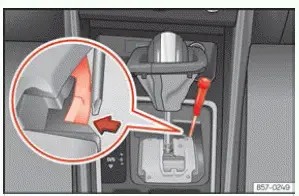
Fig. 101 Selector lever: manual release in the
parking position.
If the vehicle experiences an electrical power failure, such as a discharged battery when attempting to start the engine, the automatic transmission selector lever may remain locked in position P. Under these circumstances, the normal electrical release mechanism cannot operate, preventing the selector from being moved out of Park. To allow the vehicle to be moved when necessary, the transmission is equipped with an emergency manual release mechanism located beneath the centre console on the right-hand side of the selector lever. This mechanism makes it possible to move the selector into position N without using the normal electrical unlocking function. The procedure requires access beneath the selector lever trim and must be carried out carefully, as the release mechanism is not immediately accessible.
Removing the cover from the selector lever:
- Apply the electronic parking brake before beginning the emergency release procedure. The vehicle must be securely held in position because releasing the transmission parking lock can allow it to move if it is not otherwise restrained. If there is any possibility of the vehicle rolling, keep the brake pedal firmly depressed as well.
- Carefully lift the corners of the selector lever dust guard from the surrounding centre console trim. Once the edges have been released, turn the dust guard upwards over the selector lever handle to expose the area beneath it. Work gently to avoid damaging the trim or the dust guard while gaining access to the emergency release mechanism.
Releasing the selector lever:
- Locate the yellow emergency release tab beneath the selector lever trim. Using the flat blade of a screwdriver, press the yellow tab sideways in the direction shown in Fig. 101 and keep it held in the released position. Maintain pressure on the tab while carrying out the next step, as the mechanism must remain released for the selector lever to move.
- While holding the emergency release tab, press the locking button on the selector lever and carefully move the lever from position P into position N. Make sure the vehicle remains securely braked throughout the operation. Moving the selector into neutral releases the transmission parking lock, so the vehicle must not be allowed to roll unexpectedly.
- After completing the emergency release procedure, refit the selector lever dust guard to the centre console. Position the trim correctly around the selector lever and carefully secure it in its original location. Ensure that the cover is properly seated and that no part of the trim interferes with movement of the selector lever.
WARNING Never move the selector lever out of position P using the emergency release mechanism unless the electronic parking brake has been applied. Releasing the parking lock removes the transmission's mechanical restraint against vehicle movement, and the Seat Ateca could begin rolling unexpectedly. If there is any doubt about whether the vehicle is securely held, depress the brake pedal firmly before operating the release mechanism and maintain braking pressure throughout the procedure. Uncontrolled movement can cause a collision, serious injury or damage to the vehicle and surrounding objects. Make sure the vehicle is properly secured before attempting to release the selector lever manually.
 Inertia mode
 allows the Seat Ateca to continue travelling for a certain distance without the driver pressing the accelerator pedal. By allowing the vehicle to coast when engine power is not required, ...
 Driving on slopes
Hill Hold Control (HHC)
Hill Hold Control (HHC) helps the driver move off more easily when the Seat Ateca is stopped on an uphill gradient. The system activates when the vehicle comes to a standsti ...
Other materials:
Dual automatic temperature control
Note: You can switch temperature units between Fahrenheit and Celsius.
See Menu features in the MyFord Touch or MyLincoln Touch chapter.
A. Power/Driver temperature control: Press to turn the climate
control system off and on. When the system is off, outside air cannot
enter the vehicle.
...
Driver and passenger airbags
WARNING: Never place your arm or any objects over an airbag
module. Placing your arm over a deploying airbag can result in
serious arm fractures or other injuries. Objects placed on or over the
airbag inflation area may cause those objects to be propelled by the
airbag into your face and torso c ...
Emergency unlocking of the rear lid
Fig. 60 Luggage compartment: access to
manual release.
Fig. 61 Luggage compartment: manual
release.
If the rear lid cannot be unlocked using the normal central locking or electric opening functions, it can be released manually from inside the luggage compartment. This emergency pro ...
