
Safety warnings regarding fuel handling
WARNING Fuel is highly flammable, and its vapours can ignite if exposed to sparks, open flames or other ignition sources. Incorrect handling during refuelling may cause a fire or explosion, resulting in severe burns, serious injuries or potentially fatal consequences. Always follow the safety precautions at the filling station and exercise particular care when handling fuel or filling a spare fuel container.
- Before refuelling the Seat Ateca, switch off the auxiliary heater if the vehicle is equipped with one. The heater must not remain in operation while fuel is being dispensed, as its operation may present an ignition risk in an area where flammable fuel vapours could be present.
- Always switch off the engine and ignition before beginning to refuel. Do not leave the engine running while the fuel tank is being filled. This precaution reduces the risk associated with operating vehicle systems near the fuel filling point and must be observed throughout the refuelling procedure.
- Never smoke while filling the vehicle's fuel tank or a spare fuel canister. Smoking materials, open flames and other potential ignition sources must be kept away from the refuelling area. Fuel vapours can ignite rapidly, and even a small ignition source may cause a fire or explosion.
- Observe all applicable legal requirements concerning the use, storage and transportation of spare fuel canisters. If carrying fuel in a separate container is permitted, the container must be suitable for its intended purpose and handled in accordance with the relevant regulations. Local restrictions and filling station safety instructions must also be followed.
CAUTION For safety reasons, SEAT does not recommend transporting a spare fuel canister inside the Seat Ateca. A container filled with fuel presents an additional hazard because it contains a highly flammable liquid and may release dangerous vapours if its seal or structure is damaged. Whenever possible, avoid carrying reserve fuel in the passenger compartment or luggage compartment.
During an accident, sudden impact or severe movement of the vehicle, a spare fuel canister could become damaged and allow fuel to escape. Leaking fuel and the vapours it produces may create a serious fire or explosion hazard. If exceptional circumstances make it necessary to transport a spare fuel canister, take the following precautions when filling and handling the container:
- Never fill a spare fuel canister while it is inside the vehicle or resting on any part of the vehicle, including the luggage compartment or roof. Filling a container in these positions can allow an electrostatic charge to accumulate, increasing the risk of ignition. Always remove the canister from the Seat Ateca and place it securely on the ground before dispensing fuel into it.
- Insert the fuel pump nozzle as far as possible into the opening of the spare fuel canister. Keep the nozzle correctly positioned throughout the filling process to help prevent splashing, unnecessary fuel vapour release and accidental spillage. Fill the container carefully and avoid sudden movements of the nozzle.
- When filling a metal fuel canister, maintain direct contact between the pump nozzle and the metal container throughout the refuelling process. This contact helps prevent the accumulation of electrostatic charge that could otherwise produce a spark. Do not interrupt the contact unnecessarily while fuel is flowing into the container.
- Never allow fuel to spill inside the vehicle or its luggage compartment. Spilled fuel can release flammable vapours that may accumulate and ignite in the presence of an ignition source. Handle fuel containers carefully, ensure that their closures are secure and prevent fuel from escaping during transportation.
Fuel vapours are explosive and can create a life-threatening hazard. A fire or explosion involving fuel inside the vehicle may result in fatal injuries.
NOTICE
- If fuel is accidentally spilled onto the exterior surfaces of the Seat Ateca, remove it immediately using an appropriate cleaning method. Fuel left in contact with painted body panels may damage the paint finish or affect its appearance. Take particular care around the fuel filler opening and surrounding bodywork when removing the filling nozzle.
- Never deliberately drive until the fuel tank is completely empty. An interruption in the fuel supply can cause irregular engine operation and may damage the catalytic converter. Refuel before the remaining fuel is exhausted rather than continuing to drive until the engine stops. Maintaining an adequate fuel supply helps prevent avoidable problems with the engine and exhaust gas treatment system.
- If the fuel tank of a diesel-powered Seat Ateca has been completely emptied, a specific procedure must be followed after refuelling. Before attempting to start the engine, switch on the ignition and leave it on for at least 30 seconds. This waiting period must be observed before operating the starter, as the fuel supply system may require additional time after the tank has run dry.
When the engine is subsequently started, it may take longer than usual to begin running. In these circumstances, the starting process can take up to approximately one minute. This extended starting time may occur after the diesel fuel system has been emptied and refilled.
For the sake of the environment
Do not overfill the Seat Ateca fuel tank. Fuel expands as its temperature increases, and a tank filled beyond the intended level may allow fuel to escape when it becomes warmer. Spilled fuel can contaminate the surrounding environment and create unnecessary safety risks. Stop refuelling when the pump nozzle automatically interrupts the fuel supply rather than attempting to add more fuel.
Note The fuel tank flap does not have an emergency mechanism that allows it to be released manually if the normal opening system fails. If the flap cannot be opened using the intended procedure, do not attempt to force it or dismantle the mechanism. Contact specialised personnel for assistance so that the problem can be assessed and the flap opened without causing unnecessary damage.
Note Diesel versions of the Seat Ateca are equipped with a protective mechanism in the fuel filler neck designed to prevent the insertion of an unsuitable fuel pump nozzle. This device helps reduce the risk of refuelling with the wrong type of fuel by allowing the filler mechanism to open with a compatible diesel nozzle. The protection is intended for normal refuelling at filling stations using the appropriate diesel dispensing equipment.
- If the diesel pump nozzle is worn, damaged or unusually small, it may fail to activate the protective mechanism in the filler neck. If the nozzle does not open the device normally, do not force it into the opening. Before attempting to reposition or rotate the nozzle, try a different diesel pump with a suitable nozzle or ask qualified personnel for assistance. Using the correct filling equipment helps prevent damage to the protective mechanism.
- When adding diesel fuel from a reserve canister, the protective device in the filler neck will not open in the same way as it does when a compatible diesel pump nozzle is inserted. In this situation, one possible method is to pour the fuel into the filler opening very slowly. Proceed carefully to avoid spilling fuel, and do not attempt to force the protective mechanism open with unsuitable objects.
Refuelling
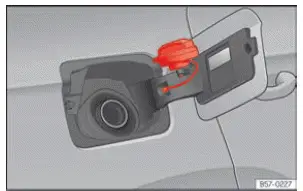
Fig. 186 Fuel tank flap with tank cap attached.
The fuel filler flap of the Seat Ateca is located on the right-hand side of the vehicle, towards the rear. The filler opening is protected by the external flap and the fuel tank cap. Before beginning to refuel, park the vehicle safely beside the fuel pump, switch off the engine and ignition, and make sure that the correct fuel type has been selected.
- The fuel tank flap is unlocked automatically when the Seat Ateca is unlocked using the central locking remote control. Before attempting to open the flap, make sure the vehicle has been unlocked. The fuel filler flap is operated as part of the vehicle's central locking system.
- Open the fuel tank flap by pressing gently on the designated retaining area of the flap. Once released, swing the flap open to gain access to the fuel tank cap. Do not use excessive force or tools to open it.
- Remove the fuel tank cap by turning it anticlockwise, towards the left. Continue turning until the cap is fully released from the filler neck. Handle the cap carefully to prevent dirt or other foreign material from entering the fuel filling opening.
- Place the removed cap in the designated holder on the hinge of the open fuel tank flap, as illustrated in ››› Fig. 186. This keeps the cap conveniently positioned during refuelling and prevents it from hanging against the vehicle's painted bodywork.
- Insert the appropriate fuel pump nozzle into the filler opening and begin refuelling. The tank is considered full when the pump nozzle automatically stops dispensing fuel for the first time. Do not continue filling after this automatic cut-off, as additional fuel may enter the expansion chamber of the tank. This space must remain available to accommodate changes in fuel volume caused by temperature variations. Attempting to force more fuel into the tank can result in overflow or fuel escaping later as it warms up.
- After refuelling, remove the pump nozzle carefully and refit the fuel tank cap. Turn the cap clockwise, towards the right, until it is fully tightened and securely seated. Make sure the cap is correctly positioned and closed before leaving the filling station.
- Close the fuel tank flap by moving it back into its normal position and pressing it shut. Check that the flap is properly closed and sits correctly against the surrounding bodywork. The refuelling procedure is complete once the cap and exterior flap have both been secured.
The correct fuel grade for your particular Seat Ateca is indicated on a label attached to the inside of the fuel tank flap. Always check this information before refuelling, especially when using an unfamiliar filling station or driving a vehicle with an engine variant different from one you normally use. The specified fuel requirements depend on the engine fitted to the vehicle. Further information about suitable fuels, fuel specifications and the requirements for petrol and diesel engines is provided in the relevant sections of the owner's manual.
The fuel tank capacity of the Seat Ateca depends on the vehicle's technical configuration and is specified in the corresponding technical data. Refer to the vehicle documentation for the capacity applicable to your model. The stated tank capacity should not be used as a reason to continue filling after the pump nozzle has automatically stopped, since the normal refuelling procedure requires the expansion space in the tank to remain available.

 Fuel types
...
Other materials:
Rear seats
Split-folding Rear Seat
WARNING: Before returning the seatback to its original position,
make sure that cargo or any objects are not trapped behind the
seatback. After returning the seatback to its original position, pull on
the seatback to make sure that it has fully latched. An unlatched seat
...
Cleaning the engine
Engines are more efficient when they are clean because grease and dirt
buildup keep the engine warmer than normal.
When washing:
• Take care when using a power washer to clean the engine. The
high-pressure fluid could penetrate the sealed parts and cause
damage.
• Do not spray a hot en ...
Introduction
The 12-volt battery in the Seat Ateca is installed in the engine compartment. It supplies electrical power to the vehicle's systems and provides the energy required for engine starting. The condition of the battery is inspected during routine maintenance, and it is replaced when necessary to maintai ...
